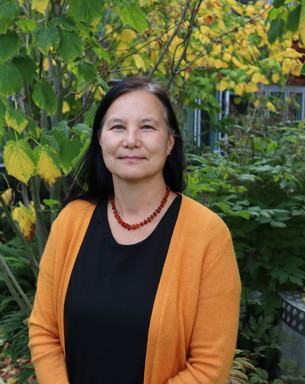
Natuschka Lee
Presentation
Background:
1990: M. Sci degree in the chemistry and biology at Lund University with a focus on environmental microbiology.
1996: PhD defense in environmental biotechnology (biological water purification) at Lund University.
1997-2026 - summary: Many years of research in microbial ecology, biotechnology, and geo/astrobiology at the Department of Microbiology at TU Munich (former research lab webpage) at the Department of Ecology, Environment and Geosciences and UCMR at Umeå University (former research lab webpage). Fellow/guest researcher at Aalborg University in Denmark, Malmö University, and the Swedish Collegium for Advanced Study, Uppsala. Since 2024 affiliated as an external researcher to the Department of Functional Microbial Ecology (FUME) at the Soil, Water and Environment at SLU, Ultuna.
Additional competences - board tasks:
- Alexander von Humboldt Alumni
- Board positions for the conservation work of the Nordic honeybee: Vice Chair of the international association SICAMM, regular board member of the Nordic Bee Association.
- Manager of the Campus Apiary at Umeå University with the endangered Nordic bee – moved to Uppland in 2025, with the aim of reestablishing the Nordic honeybee in specially designated regions in Uppland.
- Member of the Swedish Board of Agriculture's reference group for livestock genetic resources.
- Chair of the Norrland Entomological Society.
- Board member of the Friends Association of the Christer Fuglesang Space Center.
Additional expansion of competences: Since 2024 part time studies in different fields in humanities and liberal arts.
Research
Main Expertise:
- Microbial ecology and biotechnology – with various applications in environmental microbiology (water treatment, microbial symbiosis in fungi, lichens, mosses, flowering plants, and bees).
- Geo- and astrobiology (extremophile organisms on Earth and out in space)
Additional research interests:
- Physiological microbiology/clinical microbiology (microbes in aquatic organisms; microbes in humans, e.g., human pathogens, probiotic organisms).
- Pollination ecology: pollinators and their plants; the microbiological composition and properties of honey bee products; the gut flora of honey bees.
- Interdisciplinary sciences - building mutual bridges between natural sciences and humanities -towards a more sustainable future on Earth and in Space.
Environment analysis
- Visualizing microbes in their natural environments (aquatic systems, microbe-animal-plant interactions, physiological systems such as the intenstinal gut) using the FISH method (fluorescence in situ hybridization) as a complement to gene sequencing studies.
Ongoing projects:
- Molecular ecology of the aquatic-terrestrial species within the ancient phylum Chloroflexi.
- Visualizing microbes in copepods in collaboration with the Department of Ecology, Environment and Plant Sciences, Stockholm University.
- The composition (pollen, microbes, chemistry) and properties of honey bee products.
- The entomological fauna in social bees.
Teaching
1) Since 2025: Guest lecturer in the introductory course (Course, Basic Level, 1FA039) Life in the Solar System and in the Universe at Uppsala University.
2) Organization of courses for academia and industry on FISH (fluorescence in situ hybridization) for in situ detection of microbes in different environments.
Educational credentials
Many years of experience teaching at the undergraduate level in ecological microbiology, biotechnology, geo- and astrobiology, and supervising students at various educational levels – at different universities (Lund University, Technische Universität München in Munich, Umeå University and Uppsala University).
Versatile experience with educational interactions around popular science for schools, senior universities, folk high schools, science festivals, municipalities, museums, fairs, and non-profit organizations.