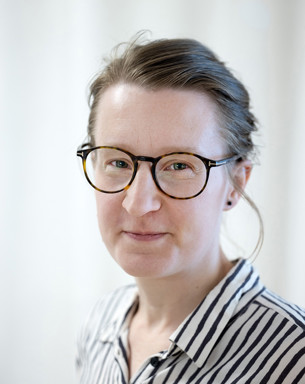
Maria Myrstener
Research
The main focus of my research is about drivers of aquatic primary productivity and biogeochemical interactions between primary producers and their environment in running waters in the Boreal and Arctic.
In my current project I work on wetland restoration effects on downstream water quality, primary production and algal communities (https://www.slu.se/forskning/forskningskatalog/projekt/m/minimera-paverkan-av-atervatning-av-torvmarker-pa-nedstroms-primarproduktion-och-algsammansattning/).
I am also currently working on evaluating the environmental effects of open cage fish farming on lake ecosystem where we study both food-web effects, water quality effects and primary production changes.
Previous projects include forestry effects on freshwaters and the downstream propagation of clear-cut effects in particular, but also fundamental aquatic ecological processes such as drivers of productivity and use of resources, in a landscape under rapid change due to climate warming. I study how nutrients and carbon are utilized and cycled within arctic and boreal freshwaters and how it effects productivity over different spatial and temporal scales.
Selected publications:
Interactive effects of drought and shading on boreal stream metabolism and algal biomass in experimental mesocosms. M Myrstener, R Baan Hof, and L Kuglerová. Freshwater Biology 2026
Downstream temperature effects of boreal forest clearcutting vary with riparian buffer width. M Myrstener, C Greiser, and L Kuglerová. Water Resources Research 2025.
Clear-cut effects on instream metabolic rates propagate downstream. M Myrstener, L A. Greenberg, W Lidberg and L Kuglerová. Journal of Environmental management 2025.
Spatial and temporal patterns of stream nutrient limitation in an Arctic catchment. Haputmann, D. and Myrstener M. Hydrobiologia. 2023
Contrasting impacts of warming and browning on periphyton. Puts, I. C., Ask, J., Myrstener, M., & Bergström, A. K. Limnology and Oceanography Letters. 2023.
Resolving the Drivers of Algal Nutrient Limitation from Boreal to Arctic Lakes and Streams. Myrstener, M.; Fork, M. L.; Bergström, A.; Puts, I. C.; Hauptmann, D.; Isles, P. D. F.; Burrows, R. M.; and Sponseller, R. A. Ecosystems. 2022.
Nitrogen supply and physical disturbance shapes Arctic stream nitrogen uptake through effects on metabolic activity. Myrstener, M.; Thomas, S.A; Giesler, R.; and Sponseller, R. A. Freshwater Biology. 2021.
Nutrients influence seasonal metabolic patterns and total productivity of Arctic streams. Myrstener, M.; Gómez‐Gener, L.; Rocher‐Ros, G.; Giesler, R.; and Sponseller, R. A. Limnology and Oceanography. 2020.
Stream metabolism controls diel patterns and evasion of CO 22 in Arctic streams. Rocher‐Ros, G.; Sponseller, R. A.; Bergström, A.; Myrstener, M.; and Giesler, R. Global Change Biology. 2020.
Persistent nitrogen limitation of stream biofilm communities along climate gradients in the arctic. Myrstener, M.; Rocher-Ros, G.; Burrows, R. M.; Bergström, A.; Giesler, R.; and Sponseller, R. A. Global Change Biology. 2018.
The effects of temperature and resource availability on denitrification and relative N2O production in boreal lake sediments. Myrstener, M.; Jonsson, A.; and Bergström, A. Journal of Environmental Sciences. 2016.
Background
PhD Physical Geography. 2021. EMG, Umeå, Sweden
MSc Geoecology. 2015. EMG, Umeå, Sweden
BSc Biology and Earth Science. 2012. EMG, Umeå, Sweden
Teaching
Course leader, Biology 1 and 2 in Preparatory year in natural science (SLU)Co-
Teacher and module leader, MSc course Forest Ecosystem Ecology (SLU)