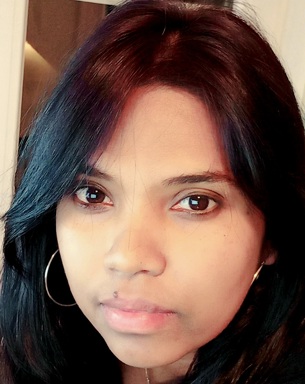
Tejshree Tiwari
Presentation
My work connects environmental science, data and research infrastructure, with a focus on climate, water and boreal landscapes. I use long-term environmental observations, spatial data and modelling to understand how environmental change affects water, carbon and biogeochemical processes.
At the Krycklan Catchment Study, I work across research, monitoring and data, with a particular interest in making long-term environmental information useful for new scientific questions and collaborations. I also develop connections between research infrastructure and emerging Living Lab initiatives, linking environmental observations with researchers, stakeholders and broader questions of climate adaptation and environmental change.
Research
My research explores the interactions between biological, chemical and hydrological processes that regulate carbon and nutrient cycling in boreal landscapes. A central theme is scaling: linking small-scale ecosystem processes to catchment-scale responses and identifying the landscape features that control water quality along the flow path from soils to streams and rivers.
To address these questions, I combine field measurements and long-term monitoring with spatial analysis, GIS, and mechanistic and conceptual modelling.
Selected publications
- Tiwari, T., R.A. Sponseller, H. Laudon (2022). The emerging role of drought as a regulator of dissolved organic carbon in boreal landscapes.
https://doi.org/10.1038/s41467-022-32839-3 - Tiwari, T., H. Laudon (2025). Trends in hydroclimate extremes: How changes in winter affect water storage and baseflow.
https://doi.org/10.5194/hess-29-4055-2025 - Tiwari, T., R.A. Sponseller, H. Laudon (2019). Contrasting responses in dissolved organic carbon to extreme climate events from adjacent boreal landscapes in Northern Sweden.
https://doi.org/10.1088/1748-9326/ab23d4 - Tiwari, T., I. Buffam, R.A. Sponseller, H. Laudon (2017). Inferring scale-dependent processes influencing stream water biogeochemistry from headwater to sea.
https://doi.org/10.1002/lno.10738
Environment analysis
I work with long-term environmental datasets from field observations, monitoring and research infrastructure, integrating data on climate, hydrology, water chemistry and landscape processes.
As coordinator for the Krycklan Catchment Study, I contribute to the management, quality control and development of long-term monitoring datasets. Krycklan data are made available through the SITES Data Portal to support open and reproducible research.
I also develop digital ways of exploring and communicating these data. The Krycklan Catchment Explorer provides an interactive overview of monitoring sites, stream order and selected catchment and land-cover characteristics across the Krycklan Catchment Study.
Explore the Krycklan Catchment Explorer → https://ttiwarir.github.io/...
I also contribute to developing connections between Swedish research infrastructures and European research networks. This includes work with IN-SYLVA Europe, the FOREST Partnership and other European initiatives, linking long-term field observations, environmental data and research infrastructure with broader collaborations in forest, climate and environmental research.
European Project Development
I contribute to the development of collaborative research projects from early concepts and partner identification through consortium building and proposal development. Recent activities include the Soils Living Lab, Water-Oriented Living Lab (WoLL), SLFD, the FOREST Partnership and IN-SYLVA Europe.
My focus is on connecting research infrastructure, environmental data, researchers and external partners to develop new opportunities for collaborative research and environmental applications.
Teaching
Organise the PhD course “Watershed Ecology and Biogeochemistry” and the Krycklan Symposium offered through the Krycklan Catchment Study.
Infrastructure and coordination
Krycklan Catchment Study
A long-term research infrastructure for hydrology, biogeochemistry, and ecosystem processes in boreal forests.

Krycklan Catchment Study
A long-term research site for hydrology, biogeochemistry, and ecosystem processes, providing valuable data on nutrient cycling, carbon storage, and forest management impacts.
BIOGEOMON 2026
Co-organiser of BIOGEOMON 2026 at SLU Umeå (8–11 June 2026), an international conference advancing collaboration in biogeochemical monitoring and ecosystem research.
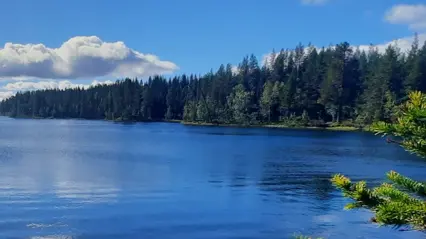
BIOGEOMON 2026
SLU host the BIOGEOMON conference on June 8-11, 2026 at the Umea Campus