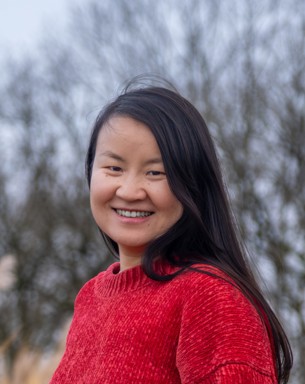
Xiaoning Zhang
Presentation
I am a researcher in the Department of Ecology at SLU studying multitrophic interactions in plant-associated arthropod communities. My research integrates community ecology, chemical ecology and biological control to understand how biodiversity shapes ecosystem functioning and sustainable crop protection. I combine laboratory, greenhouse and field experiments to uncover ecological mechanisms that can be translated into resilient, biodiversity-based agricultural systems.
Research
My research aims to understand how multitrophic interactions shape ecological communities and ecosystem functioning in plant-associated arthropod food webs. By integrating community ecology, behavioural ecology, chemical ecology and evolutionary ecology, I investigate how interactions among plants, herbivores, predators, parasitoids, hyperparasitoids and microorganisms determine biodiversity, biological control and crop resilience in both natural and agricultural ecosystems. A central goal of my research is to uncover the ecological mechanisms that can be harnessed to develop sustainable, biodiversity-based crop protection strategies.
My work is particularly known for investigating the ecological role of omnivorous insects. Unlike strictly predatory natural enemies, omnivores feed on both plants and prey, they occupy a unique position in ecological networks, influencing food webs through both direct predation and indirect plant-mediated effects. I investigate how these interactions alter plant defence, insect behaviour, multitrophic species interactions and community assembly, and how these cascading effects ultimately determine pest suppression, plant performance and ecosystem functioning.
My research combines laboratory, greenhouse and field experiments with interdisciplinary approaches including behavioural ecology, chemical ecology, plant metabolomics and community ecology. Using annual and perennial cropping systems, I investigate ecological processes across individual, population and community levels, allowing mechanistic understanding to be translated into practical applications in sustainable agriculture.
My current research focuses on ecological intensification of agriculture through the conservation and management of biodiversity. I investigate how habitat complexity, crop diversification and different functional groups of natural enemies—including omnivores, predators, parasitoids and hyperparasitoids—shape multitrophic interactions, biological control and ecosystem services. I am particularly interested in understanding how plant diversity reorganises ecological networks and strengthens the resilience of agricultural ecosystems under environmental change.
Ultimately, my research aims to develop a predictive understanding of multitrophic ecological networks across scales, from individual behavioural interactions to landscape-level community dynamics. By integrating fundamental ecological theory with applied agricultural research, I seek to provide ecological principles that support the transition towards resilient, climate-smart and sustainable food production systems.
Research groups
Teaching
Since my PhD, I have actively contributed to several BSc and MSc-level courses in ecology, pest management, and sustainable agriculture at the University of Amsterdam, Wageningen University & Research, and Swedish University of Agricultural Sciences (e.g., Behavioural Ecology, Plant-Insect Interactions, Ecophysiology, Ecological Aspects of Biointeractions, Ecology and Management of Forest Pest and Pathogens). My roles have included practical supervision and student project mentoring.
Collaboration
At SLU, I collaborate with Prof. Christer Björkman, Dr. Adriana Puentes, Dr. Maartje Klapwijk and Prof. Riccardo Bommarco from the Department of Ecology, as well as Dr. Ola Lundin from the Department of Crop Production Ecology.
Internationally, I collaborate with:
with Prof. Erik Poelman at the Laboratory of Entomology, Wageningen University & Research (the Netherlands), on multitrophic interactions, insect community ecology and hyperparasitoid ecology.
with Dr. Mitchel Bourne at the University of Zurich and Dr. Maximilien Adam at CIRAD (France) on hyperparasitoid behaviour.
with Dr. Karen Kloth at Laboratory of Entomology, Wageningen University & Research, on aphid behaviour and electrical penetration graph (EPG) analysis.
with Dr. Benedicte Albrectsen at Umeå University (Sweden) and Prof. Caroline Müller at Bielefeld University (Germany) on plant chemical ecology and metabolomics.
Supervision
Supervising students is one of the most rewarding aspects of my academic work. I enjoy supporting students as they develop their scientific thinking, research skills and independence, and I value working with students from diverse academic and cultural backgrounds.
To date, I have supervised the research projects of 5 BSc and 27 MSc students across a broad range of topics in ecology, entomology and biological control.
If you are a Bachelor or Master student interested in my research, you are welcome to contact me to discuss potential research projects and supervision opportunities.
Grants founded
2025-2027 Project grant from the Oscar and Lili Lamm Memorial Foundation. Project title: Plant defence induced by omnivore predators: detrimental or beneficial to other natural enemies?
2022-2026 Mobility Grant for early-career researchers from (FORMAS). Project title: Double function of omnivorous predators in biological control: as predators and as plant vaccinators.
Awards
2022 Stipend Award for Early Career Researchers from the King Carl XVI Gustaf’s 50th Anniversary Fund for Science, Technology and the Environment.
Selected Publications
Insekter med dubbla roller : ökad förståelse kan leda till bättre växtskydd Factsheet
Bringing Fundamental Insights of Induced Resistance to Agricultural Management of Herbivore Pests.
Induction of plant defenses: the added value of zoophytophagous predators.
Plant feeding by an omnivorous predator affects plant phenology and omnivore performance.
Herbivores avoid host plants previously exposed to their omnivorous predator Macrolophus pygmaeus.