
Time for mating
When the days get shorter, the moose begin to prepare for mating. Antlers must be rubbed, pits must be dug and urinated in, and then rolled around in so that the fur gets a really strong scent. During the only (!) day that the female moose is receptive to mating, the bull must be ready.
Follow the exciting process that is the basis of everything!
When the hours of daylight become fewer, a fascinating process begins in many of our wild animals, including moose. The decreasing light activates hormones that trigger various processes in the body that lead to mating.
This phenomenon in various species, including moose, is called ‘short-day breeding.’ Shorter days lead to oestrus and mating.
This is an adaptation to ensure that offspring are born later, when conditions are optimal in terms of climate and food.
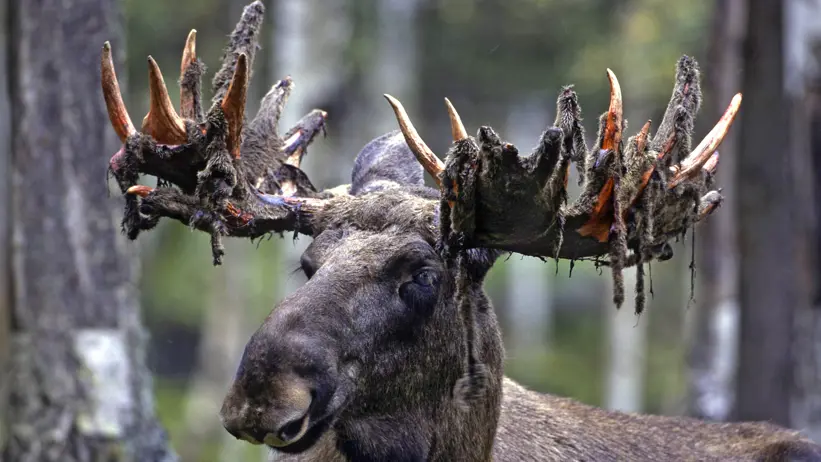
In connection with these shorter days, the bulls shed their antlers. These are now used as status symbols and, in the worst case, as weapons. They must therefore be hard and free of velvet.
– Rising hormone levels help to restrict the blood supply to the velvet, which gradually dies and then falls off or is scraped off against bushes, branches and trees, says Jonas Malmsten, researcher and veterinarian, formerly employed at SLU.
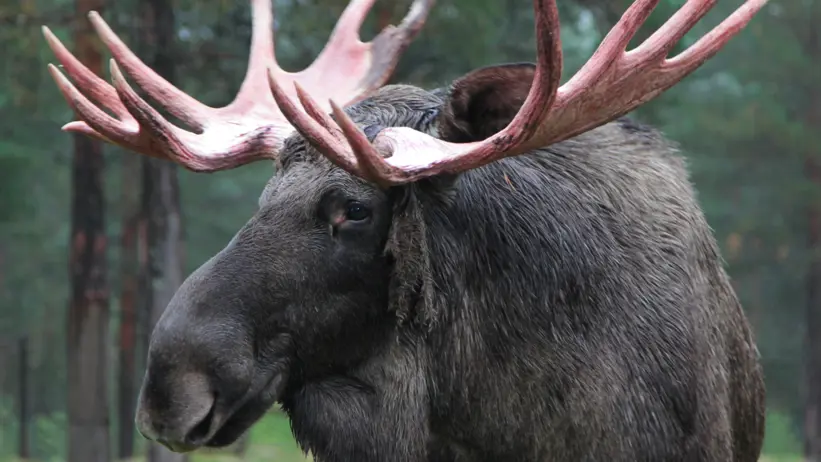
During this period, different things happen to each sex. The activated hormones in the bull cause sperm production to increase well in advance of mating. This is because it takes three weeks for sperm to develop and mature.
The hormones also cause changes in the bull's behaviour and body. He almost completely stops eating, he begins to bellow and search for females in heat, his scent changes and he becomes less shy.
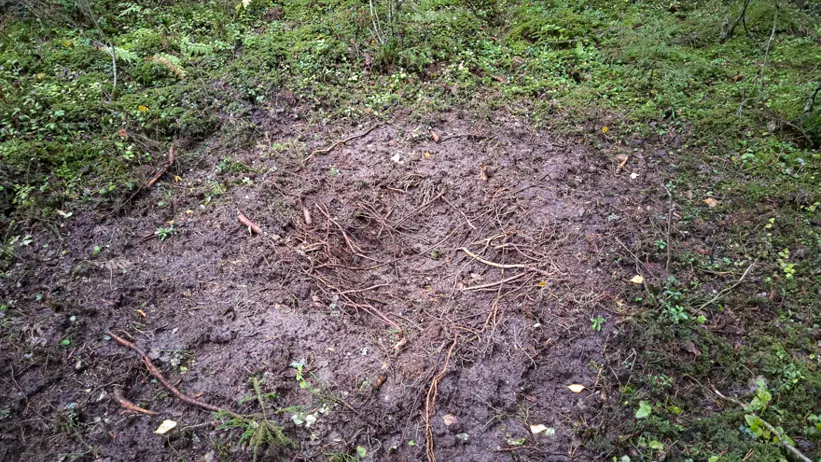
The larger the bull, the more active he becomes and moves over much larger areas than at other times of the year. His urine smells stronger with traces of special scents (pheromones) and to enhance his own scent, he kicks square metre-sized pits in the ground where he urinates and then rolls around to smell extra strong and attractive to potential partners.
The hole he has kicked and urinated in can also be attractive to cows and even calves, which sometimes choose to roll around in the hole too.
A moose bull has small testicles in relation to its body weight. They are slightly larger than hen's eggs and weigh about 60-70 grams. The heavier the bull, the larger the testicles.
– The size of the testicles indicates that he does not have the ability to mate with several cows or heifers at the same time. However, he can mate with several over time, says Jonas Malmsten.
This differs from, for example, fallow deer or red deer, which form harems, have much larger testicles in relation to their size, and can therefore mate with several does in a shorter period of time.
A young moose bull is usually capable of mating, even though his testicles are smaller than those of a large bull.
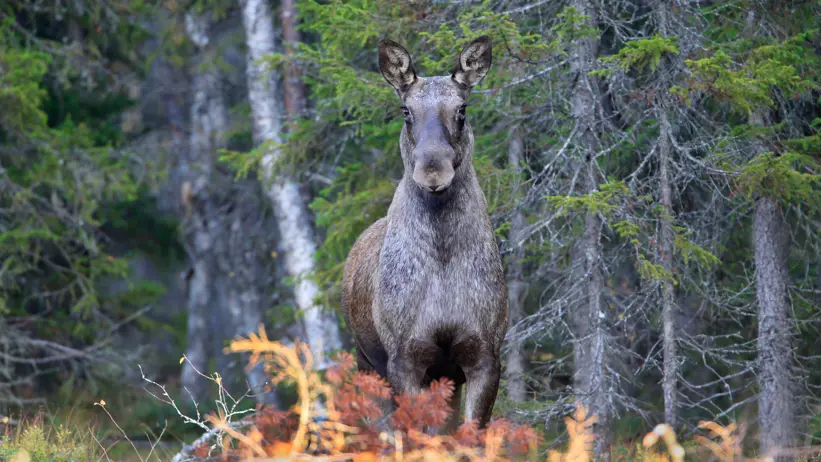
The moose cow's hormones cause her follicles in her ovaries to grow. Inside each follicle is a small egg which, if all goes well, will become a calf in the spring. Like all mammals, she has had these eggs in her body since she herself was an embryo and a foetus. The hormones also make her increasingly willing to mate.
– Moose cows do not usually actively seek out bulls, although this can happen. She may also choose a bull if several bulls court her. In that case, it is good to be large and heavy, and it is an advantage to have a large crown. Large bulls smell more. But if there are few to choose from, she usually takes the one that comes along, says Jonas Malmsten.
In addition to its mobility, the seeking bull uses its sense of smell to locate females in oestrus. Just like him, the cow's scent signals when she is ready.
When the follicle has grown large enough and is about to rupture, or has just ruptured (ovulation!), she allows herself to be mounted. The bull may sometimes need to court her for a long time and make repeated attempts to mount her. Sometimes the cow becomes irritated, but the bull is persistent. If he is not chased away or challenged to fight, he stays until she is ready. He sometimes places his head on her hip to show his interest.
Cows are receptive to mating for about 24 hours. After that, it's too late, and they normally come into heat again in about three weeks.
However, repeated heat is quite rare – only a few percent of cows and heifers come into heat again.
Older cows tend to come into heat early – as early as the end of September. After that, oestrus generally occurs in order of age. The newly sexually mature heifers come into heat last – sometimes as late as November. However, the majority of matings take place at the end of September/beginning of October if conditions and the age distribution in the herd are optimal.
Heifer and cow
A female animal becomes a cow when she has her first calf. She then remains a cow for the rest of her life. Before this, she is a heifer. The time of first calving varies across the country, but usually occurs between 2.5 and 4.5 years of age. The differences depend largely on how large and heavy she is, and in northern Sweden, she needs to be larger than in southern Sweden to have her first calf.
Contact
-
PersonSusanna Bergström, communications officerFaculty of Forest Sciences