
Reconnecting children with nature – a One Health perspective
Nature-rich environments play a key role in children’s health, development and social interaction. In this interview, Fredrika Mårtensson shares how access to biodiverse outdoor environments supports well-being – and why this matters from a One Health perspective.
Hi Fredrika,
Could you briefly describe your research – its main objectives and what you hope to achieve?
My research focuses on how natural features support children’s play, learning and health.
Early in my career, I demonstrated how children´s access to natural features influence their activities and social interactions. This led to the idea that there is a type of play outdoors that is health promoting, inclusive, dynamic and characterised by flux and transformation.
Since then, my work has expanded through multidisciplinary collaborations with researchers in public health, sport sciences and education. Together, we have explored how outdoor environments contribute to multiple aspects of children’s health and development. A large body of research from around the world has confirmed these and other benefits of nature-based play for children.
Based on my research in playgrounds I have developed advice and tools such as the Outdoor Play Environment Categories (OPEC) and the Perceived Space Characteristics (PSC).
In more recent projects, I examine how changes in urban planning and preschool design affect children’s access to nature. For example, how larger preschool units and more standardised outdoor spaces may limit children’s opportunities to engage with nature.
How does your research relate to the One Health concept?
My research highlights the interdependencies between environmental quality, human health and social development – central elements of the One Health perspective.
Access to biodiverse and stimulating natural environments is not only important for children’s well-being, but plays a key role in fostering long-term relationships with nature and environmental stewardship.
I can see that children’s engagement with nature depends on the quality and diversity of the environment. For society, the fact that many children still have access to green play environments in their daily lives is a significant preventive health measure.
What are the main challenges in this field – and where do you see the biggest opportunities?
A key challenge is to make sure that the outdoor spaces available to children do not get simplified and standardised, limiting their opportunities to play and explore their surroundings.
Also, younger children – who depend more on nearby nature and adult guidance - need biodiverse nature to bond with peers, place and nature at large.
At the same time, there are significant opportunities. One approach is to actively design and manage outdoor environments to support both play and biodiversity – an idea captured in the concept of “play biotopes.” Children are prepared to stay in tune with nature and can develop both the skills and the care needed to interact with other species.
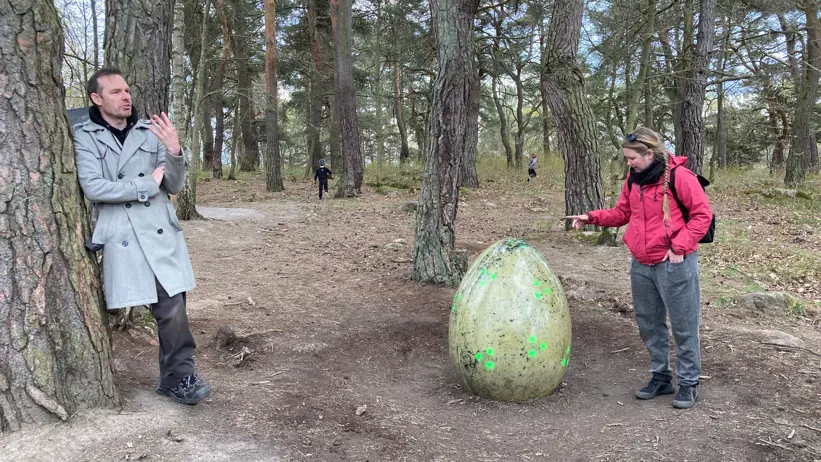
In my current and upcoming projects, I take a closer look at how biodiverse environments support children’s social development, learning and resilience. This includes studies on rewilding urban courtyards – initiatives that not only promote social interaction, but also contribute to climate adaptation, by reducing heat and managing water flows.
Across all these projects, there is a sense of urgency – to better understand the links between land use and human health, and to bring this knowledge into the education of future professionals.
More information
- Research projects:
– Sustainable encounters in large preschool playgrounds
– Sustainable Urban Play Environments - Project handbook: Sustainable outdoor stay in large preschools (in Swedish)
The handbook presents participating preschools and includes summaries of research findings, along with practical guidance on documenting outdoor activities and play as part of developing environments and practices. - Outdoor Environments for Health and Wellbeing – Master’s programme
Contact
-
PersonFredrika Mårtensson, Senior lecturer, DocentDepartment of People and Society