
Restoring landscapes for healthier people, animals and ecosystems
Can restoring forests and grasslands benefit people, livestock and nature? In this interview, Harry Fischer shares insights from a project in India exploring how ecosystem restoration may support biodiversity, food security, livestock health and human well-being.
Can ecosystem restoration support health as well as biodiversity? In this project, researchers are studying how restoration interventions in India may contribute to human and animal health, while also strengthening ecosystem functionality and biodiversity. One part of the pilot study looks at how restored forests and grasslands contribute to rural households’ diets and livestock fodder through wild foods and other landscape resources.
The project was awarded seed funding through SLU Future One Health’s 2024 call, enabling the development of new methods and the collection of pilot data on the links between restoration, biodiversity, nutrition, and health.
In this interview, we meet Harry Fischer, Associate Professor at the Department of Forest Ecology and Management, to follow up on how the project has developed. We ask what the funding has made possible, what the researchers have learnt so far, and how knowledge about restored landscapes could support people, livestock and ecosystems in practice.

Your project explores how ecosystem restoration interventions in India can support human and animal health, as well as ecosystem function and biodiversity – why is this important?
“We are currently in the UN’s Decade on Ecosystem Restoration (2021–2030), and countries around the world are increasing their ambitions and targets for restoration. Most restoration interventions emphasise ecological outcomes, but there is a growing recognition that restoration can also benefit rural communities. Particularly in rural areas of the Global South, restoration can support many aspects of everyday life, including food production and livestock keeping. In this project, we sought to understand how forest restoration might help not only to safeguard biodiversity but also improve food and nutritional security and livestock health.”
What did the seed funding from SLU Future One Health help you test or develop?
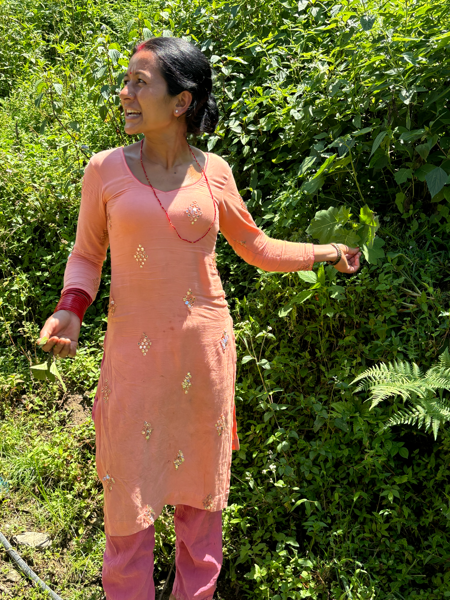
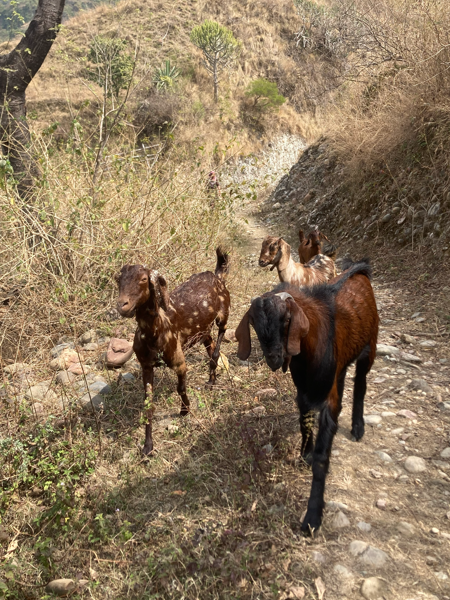
“We developed methods that allowed us to study both the direct and indirect benefits of restored forests for food security and rural livelihoods. This includes foods that people consume – wild foods collected from forests – and fodder for livestock, such as grass and leaves collected from restored forests and grasslands. We integrated these aspects into the research design of an existing project, allowing us to compare whether forests targeted for restoration and more biodiverse forests provided these benefits more effectively than non-restored forests in the study area.
Finally, the project supported PhD student Anamika Menon's fieldwork, allowing her to speak with local people, hear their stories and better understand the patterns emerging from our data.”

A key part of the pilot study concerns wild foods and fodder from forests and grasslands. What can these resources tell us about the relationship between restored landscapes, people and livestock?
“Globally, restoration interventions frequently target landscapes used and managed by people. This is not surprising – if there were no human presence, there might be no need for restoration. In densely populated areas of the Global South, forests and grasslands are part of broader livelihood and land-use systems. They provide a wide range of benefits for both people and livestock, and this influences how these resources are used and managed. This means we need to understand ecological processes and how people use and manage these landscapes, and consider both when planning restoration efforts.”
Has the pilot study provided any new insights into how restoration interventions may support both local livelihoods and ecosystem health?
“Our work shows that forest restoration is not just good for ecosystems – it can also have positive impacts on basic needs for people and livestock. In fact, we found that improved access to food and livestock resources were among the benefits that local communities valued most. In some cases, this was a strong motivator for people to get involved in restoration projects and continue caring for them after implementation.
However, we also find variation in outcomes across our study areas, and we are still working to understand what factors best explain these differences. As we further develop this work, we hope it will help us make recommendations on how to better design interventions that support these opportunities.”
Looking a few years ahead, what do you hope the research and collaboration will have contributed – both scientifically and for the communities and landscapes involved in the project?
“For me, the most important contribution of this work has been the opportunity to explore the connections between ecosystem, livestock and human health in an integrated way. This has influenced the work of our research team and has since led to several additional research proposals.
Over time, I hope to develop research that can better unravel the links between ecosystem health and human well-being from a long-term perspective. If we design interventions that support multiple dimensions of human health and well-being, does this lead to more sustainable forest use and management over time? And does this, in turn, further improve ecosystem health? What conditions are needed for these positive effects to reinforce one another over time?
Such knowledge could transform how we design restoration interventions in human-dominated landscapes worldwide.
In the shorter term, we have made plans to communicate our findings to policymakers in India and Nepal, and we hope these insights will contribute to restoration projects that better account for human and livestock needs in restoration planning.”
The seed funding has also helped generate new research ideas beyond the pilot study. While the first publications from this data are still under review or in preparation, the project has already contributed to further research proposals and related projects (e.g., this project).
More about Harry Fischer and his research and contact details.