
What can bats tell us about pollution, ecosystems and health?
How do pharmaceutical pollutants move between ecosystems, wildlife and ultimately people? By studying bats, this project explores how contaminants spread through food webs and what this can tell us about environmental health from a One Health perspective.
Pharmaceutical residues are an increasing environmental concern, especially in aquatic ecosystems. But what happens when pollutants in water move into insects – and then further into animals that feed on them? In this project, researchers are investigating whether bats can help us understand how pharmaceutical pollutants may be transferred from aquatic to terrestrial ecosystems, and what this could mean for wildlife, ecosystem health and, ultimately, human health.
The project was awarded seed funding through SLU Future One Health’s 2024 call, enabling a pilot study in Sweden and Costa Rica. The aim was to test methods, collect preliminary data and strengthen a larger research application.
In this interview, we meet Natalia Sandoval Herrera, researcher at the Department of Wildlife, Fish and Environmental Sciences, to find out how the project has developed since receiving the seed funding. We ask what the pilot study has made possible, what bats and insects can tell us about pollution moving through ecosystems, and how this research could contribute to a better understanding of the links between environmental pollution, wildlife health and human health.
Your project investigates how pharmaceutical pollutants may move from aquatic to terrestrial ecosystems through insects and bats. What did you want to understand – and why is this important?
“I want to understand whether pharmaceutical pollutants—traces of medications such as antibiotics, painkillers, and antidepressants that end up in the environment after use—can move from aquatic environments into terrestrial ecosystems through insects and the animals that eat them, such as bats.
Most research has focused on contamination in water, but ecosystems are connected. If these pollutants are moving across food webs, their impacts on wildlife, ecosystem health, and ultimately on our health may be much greater than we currently realize.”
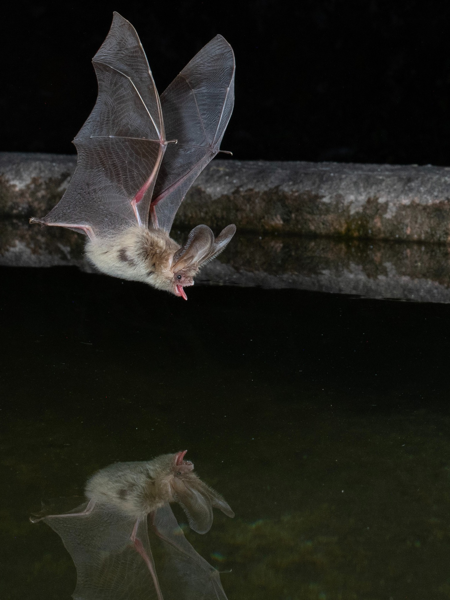
What did the seed funding from SLU Future One Health make it possible for you to test or develop?
“This was a high-risk but exciting idea because very little research has explored how pharmaceutical contaminants move through food webs, and studying wild bats can be particularly challenging.
The seed funding gave us the opportunity to test the concept through a pilot study, collect the first samples, and determine whether this pathway of exposure was actually occurring. It also helped us identify practical challenges and gather the preliminary evidence needed to secure larger funding. Thanks to these early results, the research has now expanded into a larger project supported by the Swedish Research Council FORMAS.”
Why are bats an interesting species to study in this context? What can they help us understand about pollution, food webs and ecosystem health?
“Bats are fascinating to study because they connect different habitats and can provide early warning signs of environmental problems. By moving between multiple habitats, they help transfer nutrients, pollinate plants, and disperse seeds. Because many bats feed on insects, they can accumulate pollutants from the food they eat, making them useful for tracking environmental contamination. Their high sensitivity to environmental stressors makes them key indicators of overall ecosystem health.
Importantly, bat health is also linked to human health. Stressed or unhealthy bats may be more likely to carry and spread diseases, underscoring the importance of understanding the pressures they face. Understanding how pollution affects bats, therefore, can help us better understand broader impacts on ecosystems and disease dynamics.”
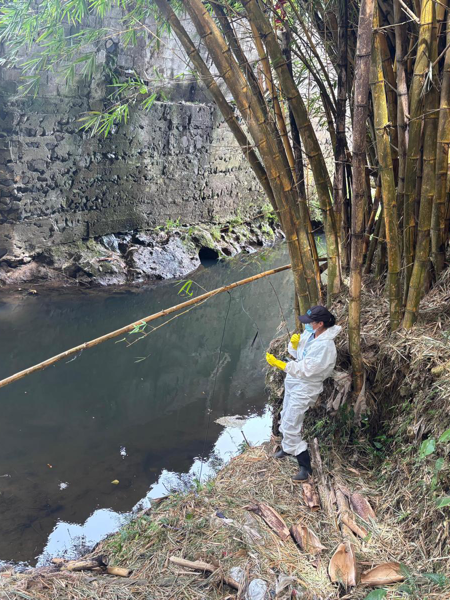
What insights have you gained so far, and what opportunities or challenges do you see ahead?
“Our early findings show that contaminants are indeed moving through food webs and ending up in bats. The compounds we detect reflect human activity and include, for example, pharmaceuticals, industrial pollutants, and even common substances such as caffeine. We also see clear differences between countries such as Sweden and Ethiopia, which have very different healthcare and wastewater management systems. These contrasts highlight the need for more global and inclusive research to understand the true complexity of pollution. We are therefore expanding sampling to regions such as Costa Rica, Brazil, and Spain.
We are currently developing methods that allow us to analyse many samples efficiently, while minimising the need to handle animals and maximising the information we gain from each sample. The next step is to examine how contaminant exposure is linked to bat health, viruses, and antimicrobial resistance.”
Looking a few years ahead, what do you hope this research will have contributed – both scientifically and for our understanding of environmental risks to animals, ecosystems and people?
“I hope this research will show just how connected ecosystems are, and that pollutants can move through them in much the same way as nutrients and living organisms. I believe that, by using holistic approaches like the ones we are using here, we can better understand environmental problems and hopefully inform strategies to monitor and reduce environmental risks that reflect this connectivity and complexity.
Scientifically, the project will help fill important knowledge gaps, especially in the Global South, where pharmaceutical pollution is widespread but understudied. As well as revealing how ecological processes can help explain broader environmental risks.
Ultimately, I believe our work will also contribute to research on how diseases spread between animals and humans, and on antimicrobial resistance, showing how environmental and wildlife health are directly linked to human health, contributing to a stronger One Health perspective in environmental sciences research.”
Read more about the project Pharma Bat.

