
AgriFoSe2030 contributes to strengthening Kisumu County’s food system governance
AgriFoSe2030 turn scientific evidence into food system policies and agricultural extension services in Kisumu County. The researchers are contributing to the Kisumu County Food System Strategy, developing a novel agricultural extension policy and strengthening the capacity of extension officers.
Contributing to reviewing Kisumu County’s Food System Strategy
Across Kenya, county governments face the challenges of strengthening food security and improving agricultural livelihoods. Yet, gaps in technical capacity and weaknesses in monitoring and evaluation can make it difficult to translate agricultural priorities into effective policies and services for farmers. In Kisumu County, AgriFoSe2030 researchers are helping identify agricultural priorities and translating them into a revised Kisumu County Food System Strategy. The engagement builds on a relationship with Kisumu County since 2014 which has created a foundation of trust and technical credibility between researchers and country government officials.
During the policy review, stakeholders identified shortcomings in the indicators used to assess outcomes and in the unavailability of baseline information against which progress could be measured. The review addresses these weaknesses by bringing stakeholders together to clarify the relevant facts and figures and establish a more credible basis for comparing commitments with subsequent results. This provides the county with a stronger starting point for tracking implementation and assessing progress. To monitor progress, AgriFoSe2030 researchers are supporting processes of developing a clearer monitoring, evaluation and learning (MEL) strategy, including dedicated budget allocations to key outcomes. Without an agreed approach to monitoring and dedicated budget lines, well-designed policies may not demonstrate credible results.
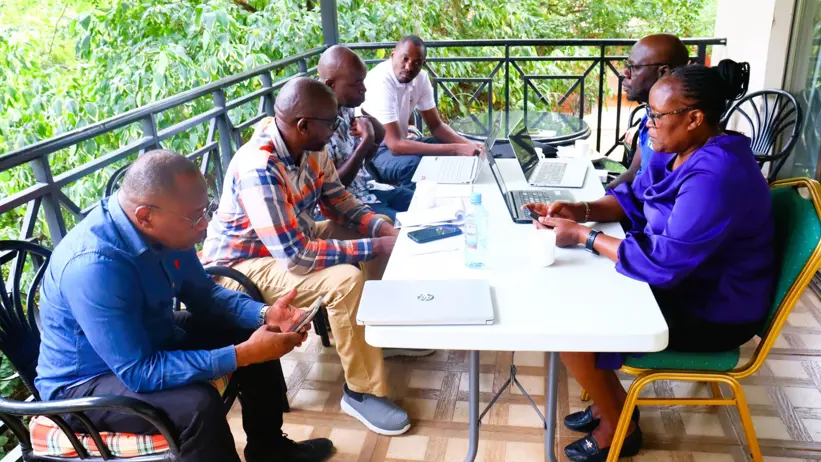
In doing so, the project is supporting a shift towards more measurable and evidence-informed food system planning. A stronger strategy can help county officials identify whether planned interventions are delivering results, where implementation is falling behind and where resources may need to be redirected. It also creates a better basis for communicating progress to citizens, development partners and other institutions supporting food system transformation.
Developing an agricultural extension policy for Kisumu County
AgriFoSe2030 researchers are also part of the team that is developing the Kisumu County Agricultural Extension Policy. Before this initiative, Kisumu County did not have its own county-specific agricultural extension policy, although a national agricultural extension policy existed. The new county-level policy is intended to provide a more locally relevant basis for organising and strengthening agricultural extension services. AgriFoSe researchers joined the county's technical working group and provided technical input, advice and support during the drafting and review of the extension policy. The proposed policy has progressed through drafting and review and is awaiting public participation before being presented to the county assembly.
Strengthening the capacity of agricultural extension officers
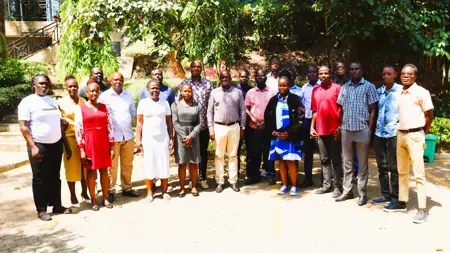
Alongside policy engagement, the project team identified that many extension officers had limited knowledge of fish production, poultry production and climate-smart agriculture as these are not included in their training. These are however priority areas for the county and integrated in the food system policy. Achieving policy outcomes related to climate smart agriculture, poultry and aquaculture improvement will be difficult without adequately trained extension staff. In addressing these gaps, AgriFoSe researchers organized a three-day capacity-building programme to strengthen extension officers’ knowledge of aquaculture production techniques in the Lake Victoria region, poultry production and disease management, and practical climate-smart solutions for crop and livestock production. The project is also preparing guidelines on best practices for agricultural extension. These are intended to provide a practical reference for extension officers and support decisions about which interventions, tools and approaches are appropriate for reaching farmers and encouraging the uptake of useful practices.
Looking ahead: From stronger institutions to better outcomes for farmers
The next phase of work will focus on translating the institutional gains into more direct engagement with farmers. Planned priorities include farmer field days, further exploration of innovative extension approaches and stronger monitoring, evaluation and communication arrangements.
Contact
-
Selorm Kugbega, Dr.
MEL and Communications
SEI, Stockholm Environment Institue
Phone: +46 (0)73- 27 04 306
E-mail: selorm.kugbega@sei.org