
When Research Meets Territory: Lessons from Participatory Action in Colombia
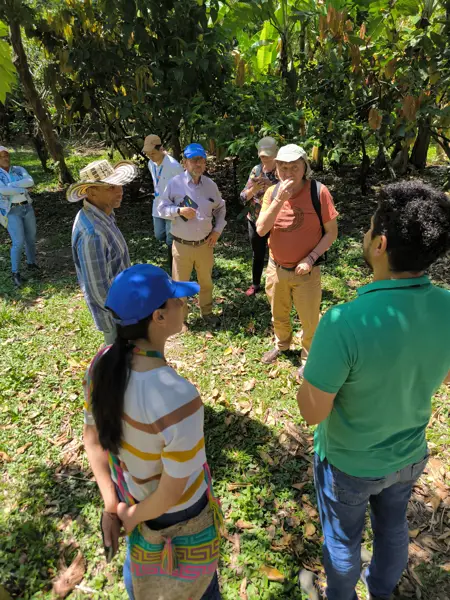
In March 2026, researchers from CIRAD and AGROSAVIA conducted a field visit to Palmira Sur (Valle del Cauca) to engage with stakeholders involved in the Participatory Action Research (PAR) activities developed under the SASI project.
The mission included exchanges with the Villa Andrea cocoa plantation led by Don Jesús, and with the Asoprorozo organization, widely recognized for its collective governance model and agroecological production practices. The visit provided an opportunity to assess both the progress achieved and the challenges that remain in strengthening territorial innovation processes and sustainable food systems.
A key positive outcome was the strong level of coordination established with territorial actors and local communities. At the same time, discussions highlighted the need to reinforce the participatory dimension of the cocoa-related PAR activities and the importance of broadening community engagement by involving additional neighbouring producers, thereby enhancing collective ownership and territorial impact.
Participatory governance
The Asoprorozo association emerged as a particularly robust example of participatory governance and community-based innovation. The organization demonstrated strong internal cohesion, leadership capacity, and significant potential to contribute to territorial agroecological transitions. Nevertheless, stakeholders emphasized the importance of ensuring that research priorities remain closely aligned with the most pressing challenges affecting local food systems, particularly economic resilience, market access, and value-chain development.
Institutional coordination also emerged as a strategic priority. Participants noted that collaboration among public institutions, local authorities, and support organizations remains uneven and fragmented. Strengthening multi-level governance and fostering closer cooperation with agricultural secretariats and territorial governance bodies were identified as essential steps to ensure the long-term sustainability, scalability, and policy relevance of the PAR process.
Methodological considerations
The discussions further addressed methodological considerations linked to ongoing experiments with bio-inputs in cocoa and plantain systems. Participants underlined the importance of robust contextual characterization, including soil conditions, production histories, and local management practices, in order to improve the reliability and comparability of results. It was also emphasized that evaluation frameworks should move beyond agronomic performance alone and integrate economic, operational, and social dimensions, including labour requirements, feasibility of implementation, and farmers’ perceptions and capacities.
Contact
Isabelle Vagneron: vagneron@cirad.fr
Gonzalo Alfredo Rodríguez Borray: grodriguez@agrosavia.co