Exploring small-scale fisheries in Zanzibar: An internship in marine research
Spending three months in Zanzibar was a unique opportunity for Master's student Marina Kapeller to combine academic research with fieldwork in one of East Africa's most important marine ecosystems.
This blog post is written by Marina Kapeller, Master's student in Biology at SLU.
This internship supported my Master's thesis in biology, which explores how small-scale fisheries and coral reef fish communities in the Menai Bay Conservation Area have changed over the past 15 years.
Alongside collecting data for my research, the experience provided valuable insight into fisheries management, marine conservation, and the everyday realities of working in an international research setting.
The internship was hosted by the Deep Sea Fishing Authority, a government institution responsible for regulating fishing activities in the Exclusive Economic Zone (EEZ) of Zanzibar and mainland Tanzania.
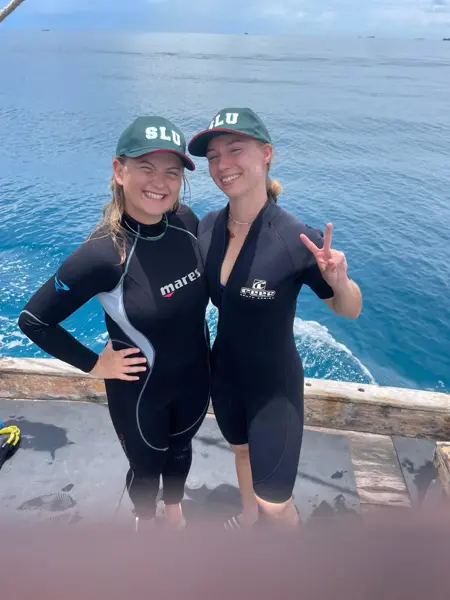
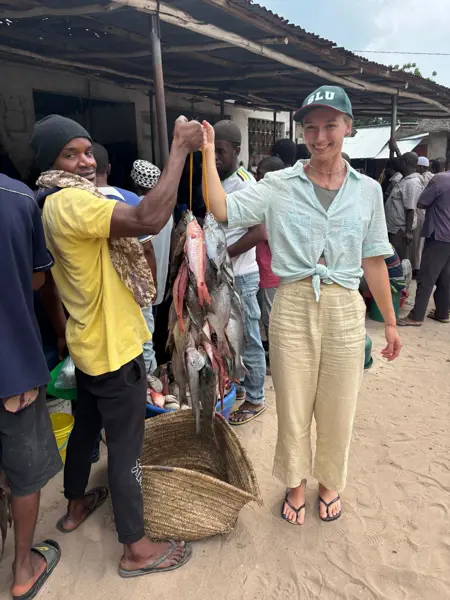
Most of my time was spent collecting data for my thesis. This included conducting semi-structured interviews with local fishers to better understand their fishing methods and experiences, as well as carrying out underwater surveys by snorkeling at different sites in Menai Bay to assess coral reef fish communities and habitat conditions.
Thanks to the support of our local supervisor, the fieldwork was well organized, allowing us to focus on collecting high-quality data while learning how research is conducted in a new environment.
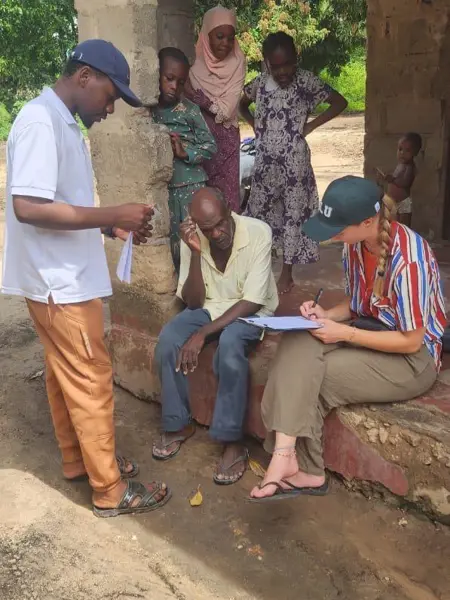
The internship gave me the opportunity to develop practical skills that are difficult to gain through coursework alone. I learned how to conduct semi-structured interviews, carry out Underwater Visual Census (UVC) surveys, and sample habitat quadrats while working in a real research setting.
Equally valuable was the experience of working with people from different backgrounds. Speaking with local fishers and spending time in coastal communities provided a better understanding of the important role that small-scale fisheries play in supporting livelihoods and food security. It also highlighted some of the environmental and social challenges facing communities that depend on marine resources.
Outside of the research, living in Zanzibar offered the chance to experience a new culture, adapt to a different way of life, and even learn a little Swahili along the way.
Conducting fieldwork abroad also meant learning to adapt. One of the biggest challenges came during the month of Ramadan, when eating and drinking in public during daylight hours was discouraged and modest dress was expected. Carrying out long days of snorkelling and fieldwork in the tropical heat required some adjustment, but it also provided a valuable opportunity to better understand and respect local customs and traditions.
As with most field projects, not everything went exactly according to plan. Being flexible, finding practical solutions, and adapting to changing circumstances became just as important as the scientific work itself.
Just as importantly, it offered the chance to experience a different culture, work alongside local experts and communities, and see firsthand how science can contribute to understanding and managing natural resources.
Advice for future students
If you're considering an international internship, don't hesitate to take the opportunity. It is an excellent way to gain practical experience while seeing your field of study from a different perspective.
Be prepared for plans to change, because fieldwork rarely goes exactly as expected. Staying flexible, keeping an open mind, and embracing new experiences will help you get the most out of your time abroad. Even the unexpected challenges often become the experiences you learn the most from.