
When waste becomes a carrier of disease: Finding solutions to protect Sweden's pigs and food production
Have you ever considered that food waste disposed incorrectly later in the trash chain can attract wild animals – and contribute to the spread of deadly diseases? This is believed to have happened when African swine fever was suddenly discovered in Sweden. How can we prevent history from repeating?
Waste disposal facilities and wild boar food
Garbage bags can appear slightly different across Sweden; brown paper bags, black sacks, or multicolored varieties. However, their function is the same: to separate food waste from other household waste.
How it works: The journey from when the bin is emptied outside our homes to the final destination of the waste varies slightly depending on where you live in Sweden. However, what they all have in common is that in many parts of Sweden, the waste makes a stopover at various types of waste facilities.
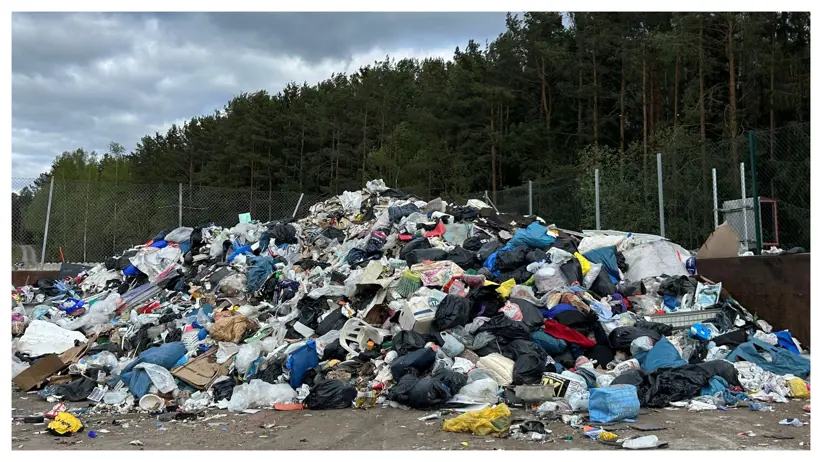
So what happens when we dispose of waste incorrectly, and food waste ends up in nature or in the residual waste bag? Well, it risks attracting wild animals, including wild boars.
Which has proven to be far from risk-free.
When wild boars find our garbage – and the infection finds them
There are a number of diseases that can affect pigs, both domestic pigs and wild boars, but which are not dangerous to humans. One such example is African swine fever (ASF), which can be found in uncontrolled or illegally imported meat products from countries where the disease is present.
This marked the start of the first ever outbreak of ASF in Sweden. A case that the SVA (Swedish National Veterinary Institute) has repeatedly analyzed. The conclusion? That it most likely occurred when wild boars found meat that was already infected, and ate it. Whether the initial spread of infection occurred at or outside a waste disposal site is impossible to determine with certainty, but it is known that many wild boars gathered there and spread the infection further.
This time, Sweden managed to stop the outbreak through rapid intervention, cordoning off affected areas, and culling all animals that could potentially carry the infection. Fortunately, the infection never reached our domestic pigs, . But the outbreak also shows how quickly a contagious disease can spread once it gains momentum, and how serious the consequences can be.
How infected wild boars become a danger to our domestic pigs
But how can an infection such as ASF reach our domestic pigs, just because wild boars gets exposed?
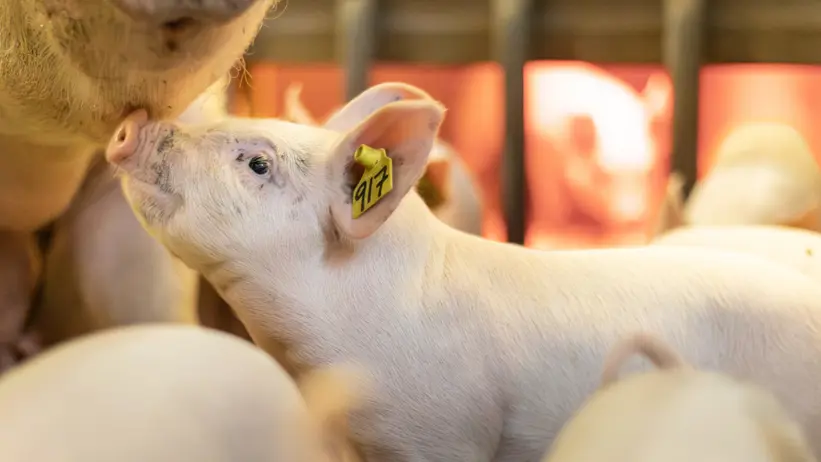
Well, pigs in food production are currently kept either indoors (conventional farming) or outdoors (organic farming). Since diseases such as ASF are transmitted both through direct contact between animals (e.g., wild boars and pigs through fences for outdoor animals) and indirectly via other objects/people that have come into contact with the infection and bring it in, it is important to ensure that the infection does not exist in our country at all.
Joining forces for safer waste management
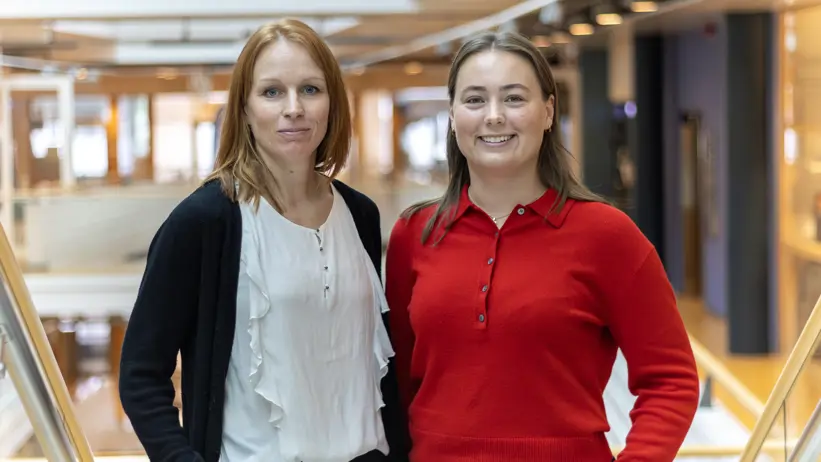
Shortly after the outbreak, research leader Elisabeth Rajala and her colleagues at SLU, in collaboration with Swedish pig farmers, submitted an application to contribute to greater knowledge about waste management in Sweden and, in the long term, to prevent further outbreaks in Sweden. Then, doctoral student Astrid Bornfeldt Persson was hired.
The research team now has an important mission: To investigate how we can prevent our waste management from providing opportunities for the spread of infection in the future. People from several disciplines, including veterinarians, sociologists, and the chair person from the Swedish Pig Farmers' Association, are now working together. Efforts includes risk analyses to identify more places in Sweden where future outbreaks could occur, based on both the presence of wild boar and how waste is managed locally.
Since the infection most likely reached wild boars via food waste when Sweden was affected in 2023, the project's goal is to look at Sweden's waste management: From the bin outside your home to its final destination. The aim is to identify critical points/routes of infection where wild animals can access food waste and potentially be exposed to diseases such as ASF.
Because believe it or not, this has not been mapped before.
Doctoral student Astrid Bornfeldt Persson adds:
More specific information about how the project will be carried out can be found at the bottom of the page.
Right on time: Knowledge to bring home to your waste management
You, me, and all of us as individuals can contribute to solving this problem by sorting food waste into the right bags and avoiding throwing meat away in nature. Also, remember that it is illegal for private citizens to bring meat from countries outside Europe into Sweden.
She believes that this project is right on time, now that we have seen evidence that infectious diseases such as ASF can spread here in Sweden – fast and with deadly efficiency.
Facts about this project
- Official name: “Preventing the spread of African swine fever to domestic pigs and wild boars via food waste”
- Expected to run from 2025 to 2029 and funded by the Swedish Research Council for Agriculture and Forestry
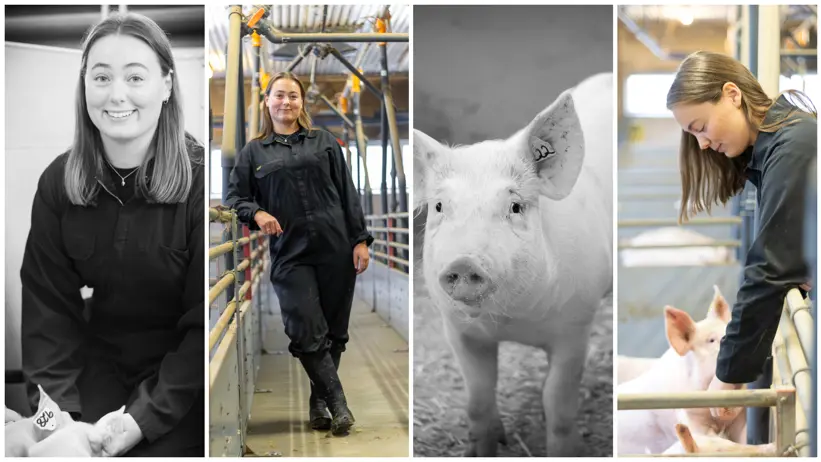
- The doctoral student in the project is Astrid Bornfeldt Persson, together with a research team consisting of:
- Elisabeth Rajala, veterinarian and researcher specializing in sustainable food production at SLU.
- Susanna Sternberg Lewerin, veterinarian and professor of One Health and antimicrobial resistance at SLU.
- Hedvig Gröndal, researcher in sociology specializing in medical knowledge at SLU.
- Sebastian Abrahamsson, researcher and Associate Professor in sociology specializing in waste, recycling, and sustainability at Uppsala University, UU.
- Johan Eriksson, pig farmer and chairman of the Swedish Pig Farmers' Association.
- Erika Chenais, state veterinarian and researcher in veterinary epidemiology at the National Veterinary Institute, SVA.
- Plus a reference group with people from different parts of society whose knowledge is important for helping the project move forward.
The project can be broadly divided into three parts, simply described as:
- The first part is based on survey studies targeting Swedish municipalities and waste contractors. It examines wild animals' access to waste, routines, measures, and knowledge related to ASF.
- The second part of the project focuses on a number of selected municipalities in Sweden, through both interviews and observations. Cameras will be set up to study wild animals in connection with waste facilities. The goal is to gain a deeper understanding of the risks involved in waste management at these sites, as well as what can affect the conditions for safe waste management.
- In part three of the project, we will evaluate the risks of ASF spreading with the current handling of food waste and assess how food waste management can be included in future riskmodeling for ASF. Such knowledge will contribute to more comprehensive risk assessments of the introduction of ASF in Sweden.
Contact
-
PersonAstrid Bornfeldt Persson, Doctoral studentHBIO, Bacteriology, Virology, Food Safety and Veterinary Public Health