
What shapes farmers’ attitudes towards weed management?
Weeds are a familiar challenge for farmers, but how best to manage them is a matter of debate. A survey of 259 Swedish farmers reveals contrasting views on herbicides and offers insights into what it might take to encourage more sustainable weed management.
Weeds compete with crops for resources and can reduce yields and harvest quality. At the same time, they contribute to biodiversity and support important ecological functions in agricultural landscapes such as pollination and pest control. Finding ways to balance these benefits with productive and profitable farming is a challenge for sustainable agriculture.
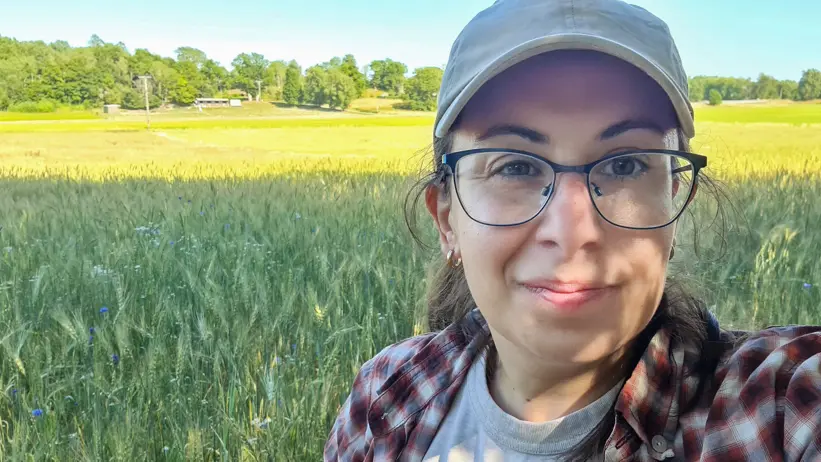
SLU researcher Eirini Daouti is investigating weed management from both ecological and social perspectives. Her research explores the potential of biological control through natural weed seed predators, as well as farmers’ attitudes towards ecological alternatives to herbicides.
Shared concerns, different perspectives
Preliminary results from the survey, which received 259 responses from Swedish farmers, reveal clear differences between organic and conventional farmers. Although the two groups appear to share similar views on the effects of weeds in agricultural fields, their perceptions of herbicides differ considerably.
– Organic farmers tend to associate herbicide use with negative effects on beneficial organisms, while conventional farmers are more likely to associate it with increased crop yields, says Eirini Daouti.
The extent of these differences came as a surprise.
Weeds – more than a threat to crop production
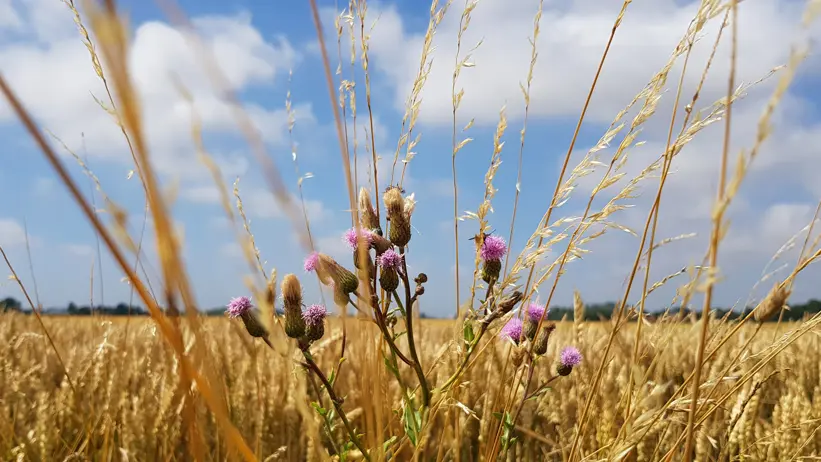
Farmers primarily associate weeds with risks to crop yield, profitability and harvest quality. According to Eirini, these concerns are well founded.
– There is strong scientific evidence that increasing weed biomass can reduce crop biomass, so farmers associating weeds with risks to yield is justified.
High levels of weed infestation can also cause practical problems, such as weed seeds contaminating harvested crops. The ecological benefits of weeds, on the other hand, may be less apparent to farmers.
In a complementary three-year field study around Uppsala, Eirini is investigating how weed diversity and natural seed predators influence weed communities. Seed-eating insects, such as ground beetles, can contribute to biological control by consuming weed seeds and reducing the number of weeds that emerge in subsequent growing seasons. By combining ecological research with insights into farmers’ beliefs, she hopes to identify opportunities for more sustainable weed management.
What would encourage farmers to adopt alternatives to herbicides?
Developing effective alternatives to chemical weed control is only part of the challenge. Understanding what farmers need to adopt them is equally important. Preliminary results suggest that higher prices for agricultural products and greater access to mechanical weed control tools are particularly important to conventional farmers when considering alternatives to herbicides.
– The responses suggest that, for farmers to reduce their reliance on herbicides while remaining profitable and competitive, economic and practical support are important, says Eirini.
Further analysis will explore how among other variables farmers’ beliefs and norms influence their willingness to adopt alternative approaches. The findings could help inform strategies that support a transition towards more sustainable weed management.
Looking beyond Sweden
Eirini hopes to expand the research to other European countries to investigate whether similar patterns emerge among farmers under different agricultural and economic conditions.
– I would love to expand this research to a European scale and explore whether similar patterns emerge among farmers in other countries. Given that many policies relating to agricultural management are developed at EU level, I think this type of research is very important.
Read more
Read more about Eirini Daouti’s research project in this previously published SLU news article:
Three years in the field: exploring the hidden dynamics of weed communities
Contact
-
PersonEirini Lamprini DaoutiDept. of Crop Production Ecology, Weed biology and management