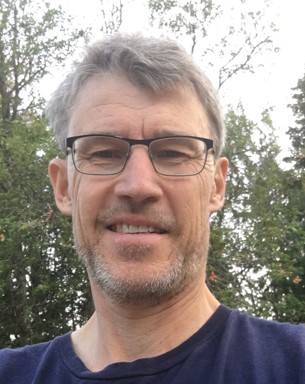
Ulf Skyllberg
Presentation
I received a PhD in Soil Science in 1993 and became docent i Soil Chemistry in 1999. I am a professor in Geochemistry since 2005. Jag have been the main supervisor of 7 PhD students and 9 Post-docs and I have co-supervised 7 PhD students and 6 Post-docs. I have been principal invstigator (PI) of 6 research projects funded by the Swedish Research Council (VR) and 3 projects funded by the Swedish Research Council for Environment, Agricultural Sciences and Spatial Planning (FORMAS) amounting to a total of 24 MSEK for the period 1999-2029. From the Kempe Foundations, the Carl Tryggers Foundation, Oscar and Lili Lamms Stiftelse and The Swedish EPA I have received another 20 MSEK as PI. I have published 110 peer-reviewed scientific publications which have been cited 9800 times (Google Scholar).
Research
In my research group we study the biogeochemistry and environmental geochemistry of natural organic matter and trace metals in soils, sediments and waters. The goal is to advance mechanistic, molecular-scale understanding of biogeochemical processes in control of chemical speciation and transformation of trace metals, in particular the element mercury (Hg). Laboratory experiments are combined with experiments and observations made in the field to resolve processes working at different time and spatial scales. We use synchrotron light X-ray absorption spectroscopy (XAS), combined with other spectroscopic techniques, wet chemical methods, microbial incubation experiments and chemical speciation modeling to resolve the link between between chemical speciation and mercury transformation processes in complex matrices such as soils, sediments and natural waters.
Research on trace metal biogeochemistry requires and provides further in-depth understanding of general redox and acid-base chemistry, including geochemical reactions involving major components such as natural organic and mineral matter, and major elements such as e.g. carbon (C), sulfur (S) and iron (Fe). Microbial activity, including cellular uptake and biotic transformation are also key processes in this research.
Process-oriented biogeochemical information on trace metals, including their bioavailability and uptake in food-webs provides a platform to investigate the potential impact of various types of land-use practices, including forestry, on the environmental health and quality of soils, waters and biota. To examplify this, we have in three FORMAS projects studied the effects of different types of wetlands and their restoration, forest harvest in uplands and lowlands, and the importance of different lake types for the bioavailability of the very toxic form of methyl mercury (MeHg). These projects have found black alder swamps (Alnus glutinosa) to be sinks for MeHg, well-drained soils inundated after forest clear-cut to be hot-spots for MeHg formation, and dark (humic) lakes to protect MeHg against photodegradation. These findings may all have consequences for the adjustment of land-use practices, such as prioritizing restoration of Alnus glutinosa swamps, minimizing the negative effects of forest clear-cut by not connecting soil "hot-spots" of MeHg formation with draining streams, and take actions to minimize brownification of lakes.
Research projects
- Photodegradation of methylmercury in lake water
- Time-resolved chemical speciation of mercury in control of transformation processes
Research groups
Teaching
I currently teach courses in fundamental inorganic chemistry, soil science and geology making up approximately 10% of my working time. I also supervise MSc students in the subject of biogeochemistry.