
Moore than just moose: Insights from research on the audience of the Great Moose Migration
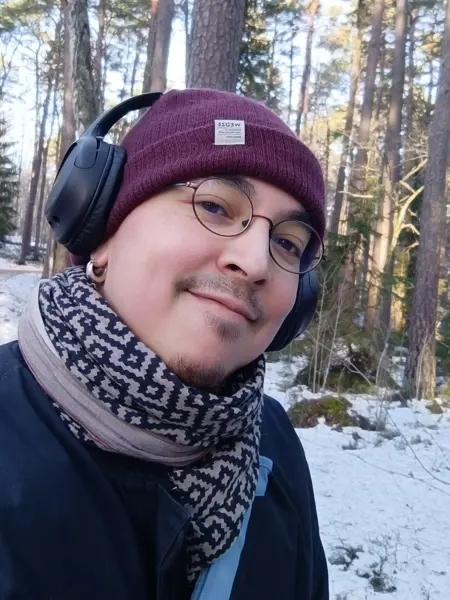
Minh-Xuan Truong has studied the audience of Den stora älgvandringen (The great moose migration) for a couple of years now. This is what he found. Read his own story!
For the past two years, I have been studying Den Stora älgvandringen, the Swedish slow TV livestream that follows moose as they migrate through the forests and rivers of northern Sweden. At first glance, the programme may seem very simple: a few cameras, natural sounds, long periods of stillness, and occasionally a moose crossing the water. But my research shows that this broadcast is much more than a wildlife programme. It has become an important example of how people experience nature through digital media today.
Not just moose
One of my main findings is that viewers do not come only for the moose. Many people watch because the programme offers something rare in contemporary media: slowness. Instead of constant stimulation, it invites patience, attention and calm. In the first survey I launched in 2024, more than 2,000 viewers responded, and many described the programme as restorative and immersive. They appreciated the natural sounds, the unedited rhythm of the broadcast, and the feeling of encountering nature on its own terms. Many also described feelings of nostalgia, emotional closeness and renewed curiosity about wildlife.
Important today
This matters because direct contact with nature is becoming harder to maintain for many people. Urban life, screen-based routines and busy schedules often reduce everyday experiences of the natural world.
My research suggests that a programme like Den Stora älgvandringen cannot replace being outdoors, but it can still foster meaningful connections. It can help people feel emotionally engaged with animals and landscapes, and it can support an interest in biodiversity and conservation, especially for those whose access to nature is limited.
Multitasking
Another important part of my research has focused on how people actually watch the programme. They rarely just sit still and do only one thing. Many viewers combine the livestream with chatting online, reading comments, doing housework, knitting, drinking coffee, checking several camera angles, or sharing reactions on social media.
Rather than simply distracting from the experience, this layering of activities can make the programme more personal and more social. In our research, we found that this kind of media multitasking can create a richer form of engagement, where the experience becomes both intimate and communal at the same time.
Together with others
The programme also creates a shared public space. Viewers gather around the livestream, react together, exchange observations, ask questions, and return year after year.
This means that Den Stora älgvandringen is not only about watching animals. It is also about participating in a seasonal ritual with others. Even when viewers are alone at home, they are often part of a larger collective experience centred on waiting, noticing and caring about what unfolds on screen.
Our research shows that digital media can sometimes bring people closer not only to nature, but also to one another through nature.
Fast and slow
I have also studied what happens when the long livestream is turned into short, curated highlights. These clips make the programme easier to browse and share, and they can help new audiences discover the richness of the boreal forest. But they also change what people see. In an analysis of 1,063 highlights from the 2023 and 2024 seasons, we found that the highlights strongly favoured charismatic animals, especially moose, and emphasised visually striking moments. This means that the highlight system can broaden interest in wildlife, while also narrowing attention toward the most spectacular and easily shareable parts of nature.
Wait, listen and notice
Taken together, my research shows that Den Stora älgvandringen reveals something important about our time. In a fast, fragmented and often stressful digital world, many people are still looking for slower rhythms, seasonal markers and meaningful contact with the more-than-human world.
This programme succeeds not because it is dramatic all the time, but because it allows viewers to wait, listen and notice. It shows that digital nature experiences can be emotionally powerful, socially meaningful and ecologically valuable, even if they are different from being physically outdoors. In the end, Den Stora älgvandringen is not just about moose crossing a river. It is about how humans, media and nature are becoming connected in new ways.
Survey 2026
My research on Den Stora älgvandringen continues this year, and I need your help. I am launching a new survey about the sound of nature and the soundscape of the programme, because many viewers have told me that the natural audio is a very important part of the experience. I would like to better understand how the sounds of birds, wind, water and silence shape people’s enjoyment, attention and connection to the broadcast.
The research is funded by Formas and the Swedish Environmental Protection Agency.
Contact
-
Person
-
PersonAnna Lundmark, Communications officer, SciFestDepartment of Ecology , joint staff/department office