PharmaBat
KEY POINTS- Investigating how bats transfer pharmaceutical pollutants from aquatic environments to terrestrial ecosystems.
- Assesses the implications of this exposure for bat health.
Project overview
Participants
More related research
Global goals
- 3. Good health and well-being
- 6. Clean water and sanitation
- 12. Responsible consumption and production
- 15. Life on land
Short summary
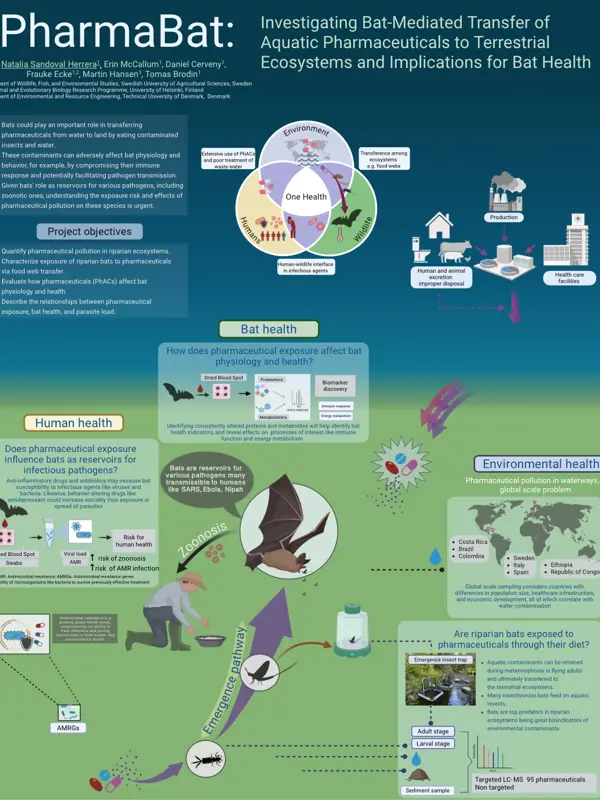
The project focuses on how pharmaceutical pollutions spread from aquatic environments and what effects they have on bats, their health and the role bats play in the spread of disease.
Pharmaceutical pollution poses a growing threat to our environment, with traces of medicines detected in nearly all parts of the world. These drugs, due to their widespread use and ability to persist and build up in ecosystems, are recognized as hazards to both human and wildlife health. While much research has focused on the impact of pharmaceuticals on aquatic organisms, their transfer to terrestrial ecosystems remains largely unexplored. Animals like bats, which feed in areas bordering water bodies, could be key players in moving these contaminants from water to land. This pollution can harm bats' health and behavior, potentially affecting their immune system, stress response, and ability to transmit diseases. Given bats' role as carriers of various pathogens, some of which can be transmitted to humans, understanding how pharmaceutical pollution affects these species is crucial.
PharmaBat aims to shed light on the impacts of pharmaceuticals on bats and their ecosystems using an integrative approach. Specifically, we will investigate if bats are exposed to pharmaceuticals through their diet, evaluate their overall health including the presence of microbes using advanced molecular techniques, and link this with their ability to spread infectious diseases.
We will pioneer the study of links between pollution and disease dynamics in bats, bringing light to the effects of human activities on wildlife and human health in our rapidly changing world.
Partners
Martin Hansen, DTU University, Denmark
Kinndle Blanco IRET, Costa Rica
Caio Graco Zeppelin, Federal University of Bahia Salvador, Brazil
Interview: What can bats tell us about pollution, ecosystems and health?