
A matter of life and death for kittens – research for a full feline life
Cats are said to have nine lives, but that is not always the case. Two out of ten kittens die in the first weeks of life – often without an explanation. Researchers are looking for answers to why life ends so early for some kittens, and how more of them can get the chance to live a full feline life.
The world is dark and silent. The warmth of their mother’s body and her life-giving milk are all that exist. This is how life begins for a kitten. Only after 7–14 days do more senses awaken, one by one: eyes open and ear canals begin to function, suddenly adding new dimensions to the world. On unsteady legs, the kittens begin to explore life – an adventure that, for most, soon develops into a fast-paced existence shaped by play and instinct.
But not for all of them.
his is how Linn Aksén, a small-animal veterinarian and doctoral student, describes the research project “A Cat’s Life,” which has been launched to improve kitten survival rates.

From full of life to sudden death
There are, of course, cases in which the cause of death is clear, even in kittens. Congenital abnormalities or complications during birth are two examples. But these causes are far from sufficient to explain all the kittens that fail to survive their first weeks of life each year.
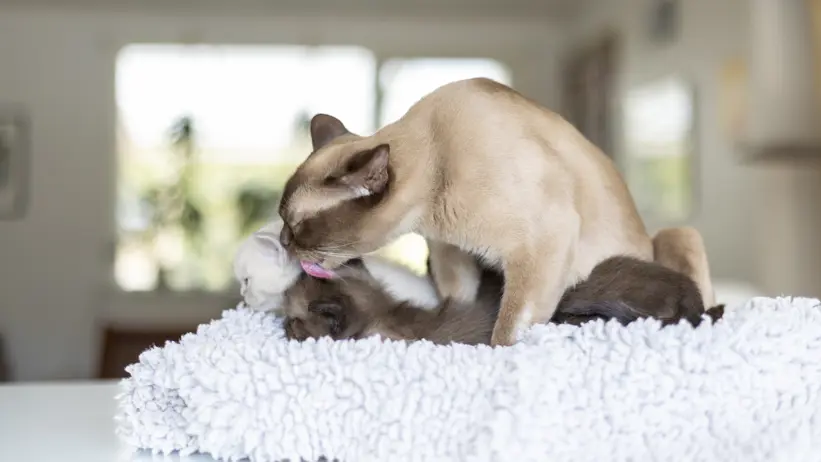
There are clues, however. A previous questionnaire study found that around one third of Swedish cat breeders have cats showing signs of certain infectious diseases.
And that is where this next investigation begins.
Feline panleukopenia, cat flu and coronavirus
Cat flu, feline panleukopenia, and feline coronavirus are three major infections that spread among cats.
This means that infectious agents may be circulating without causing noticeable illness in adult cats, while unexpectedly becoming life-threatening to kittens. How often kittens die specifically as a result of infectious diseases is one of the questions the research group is now setting out to answer.
Between now and 2030, the researchers will investigate why so many kittens die early in life and how such deaths might be prevented in the future. Their work will follow four main lines of investigation:
- The survey: the research group will gather more information about the current situation and begin identifying potential observable risk factors.
- The post-mortem examinations: the researchers will seek answers to the often unanswered question of why kittens around Sweden have died early in life.
- The sampling study: cats showing signs of certain infections will be sampled to provide an overview of which viruses are circulating among cats in Sweden and to investigate patterns of transmission.
- Virus characterisation: the viruses detected during the study will be examined in detail.
Together, these four parts will hopefully provide the knowledge needed to give more kittens the chance to experience a full feline life.
A chance at a full feline life
When it comes to viruses, prevention is crucial – and effective prevention first requires knowing which specific viruses the animals need to be protected against.
Because despite the saying that cats have nine lives, this is clearly not always true. With greater knowledge, it may be possible within a few years to develop better recommendations and guidelines to help breeders, cat owners and veterinarians reduce the spread of infection – and, in turn, mortality among these young animals.
In the corresponding puppy health project conducted by research colleagues at SLU, results have shown that puppy mortality increases when there are more young dogs in the household. It is possible that this kitten project could reveal similarly important – perhaps life-saving – insights.
Such knowledge could make the difference between life and death, and could eventually be put into practice in homes and by breeders seeking to protect their young animals.
Because perhaps the question is not whether cats have nine lives, but whether they can be given the chance to live one full feline life.
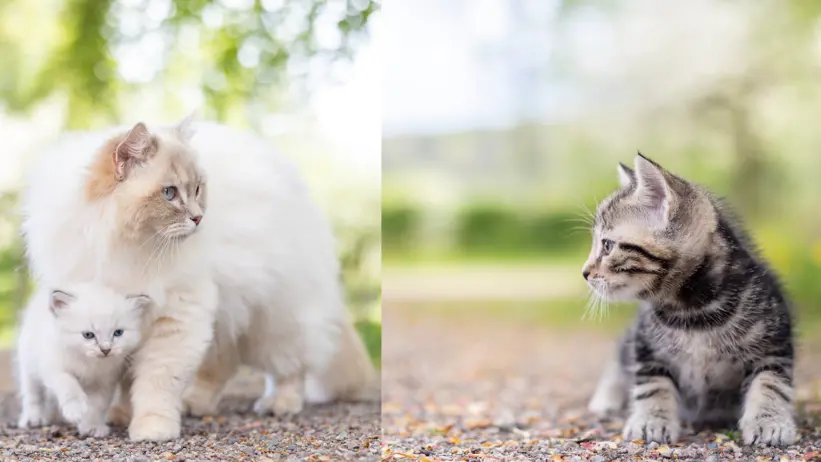
Do you want to contribute to the study?
About the project
- The project’s official title is: A cat´s life: infections in kittens and young cats.
- The project is expected to run from 2026 to 2030 and is funded by The Greater Stockholm Animal Healthcare Foundation and the Mats F. and Catarina Linde Forsberg Foundation.
The doctoral student in the project is Linn Aksén, veterinarian, working together with a research group consisting of:
- Principal supervisor Jonas Johansson Wensman, veterinarian and Senior Lecturer in veterinary virology at the Swedish University of Agricultural Sciences (SLU).
- Cecilia Ley, veterinarian and pathologist at SLU.
- Bodil Ström Holst, veterinarian specialising in reproduction at SLU.
- Ninni Rothlin Zachrisson, veterinarian specialising in feline clinical medicine at SLU.
- Annika Kozok, veterinarian at AniCura Djursjukhuset Albano.
Broadly speaking, the project can be divided into four parts:
- In the first sub-study – the survey – kitten mortality will be investigated through a questionnaire sent to all breeders registered with National Association of Swedish Cat Clubs (SVERAK). The research group hopes to identify potential risk factors and establish a foundation for the continued research.
- The second sub-study – the necropsy study – aims to investigate why kittens die and how often infections are involved. To explore the causes of mortality, deceased kittens will undergo post-mortem examination, with the aim of examining at least 200 kittens.
- In the third sub-study – the sampling study – cats showing signs of certain infectious diseases will be sampled to investigate which viruses are present in the living cat population in Sweden. The aim is to gain an overview of which infectious agents are circulating among cats and whether any patterns of transmission can be identified.
- In the final part, viruses detected in the collected samples will be examined genetically to determine whether there are patterns distinguishing kittens that became seriously ill and died from those that experienced only mild disease. Are there differences in the characteristics of the viruses? Could different variants of the same virus be more or less aggressive?

Read more interviews with researchers
Contact
-
PersonLinn Aksén, Doctoral studentHBIO, Bacteriology, Virology, Food Safety and Veterinary Public Health