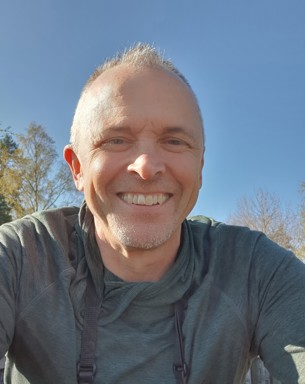
Fredrik Widemo
Presentation
In my research group, we combine natural and social science to examine how wildlife interacts with ecosystems and people, primarily in temperate and boreal forests. Among other questions, we study how management balances ecosystem services from wildlife, forestry and agriculture. Our work integrates research, environmental monitoring and teaching through collaborations within SLU and with national and international research partners.
My projects in research and environmental assessment are run in close collaboration and ongoing dialogue with authorities and stakeholders such as the Swedish Environmental Protection Agency, County Administrative Boards, the Swedish Association for Hunting and Wildlife Management, forest companies, hunters, forest owners, and farmers.
Research
Impacts from wildlife on landscapes and land use
In Moose Forage in the North and Future Yields, we study how grazing and browsing affect forest regeneration, stand structure, growth and revenue, and how these effects depend on forage availability, ungulate communities and silviculture. Here, the focus is on how wildlife damage limits forestry. In Browsing Biodiversity, we investigate how ungulate grazing and browsing affect biodiversity through studies of plants, invertebrates, and fungi. An important question is whether wildlife grazing and browsing can replace historical livestock grazing as a tool for restoration and conservation.
Impacts of landscapes and land use on wildlife
Building on the completed research programme Beyond Moose, we examine how forage availability, climate and competition affect resource use, body condition and reproduction in ungulates, and how harvest strategies shape populations. In Moose Quality in the North and Moose Forage in the North, we link diet selection and movements to individual body condition. Reproductive Timing examines reproductive timing in seven species and the influence of climate, providing evidence for future reviews of hunting seasons.
Adaptive management of natural resources
Wildlife provides regulating, provisioning and cultural ecosystem services, but also limits other services and may cause disservices. We examine how ecological and social interactions shape trade-offs in management, and how different strategies and tools support sustainable management of natural resources.
We evaluate ungulate management through formation and implementation of harvest strategies, and their ecological an social outcomes. Repeated surveys examine how hunters’, forest owners’ and farmers’ objectives, attitudes, trust and perceived conflicts affect decisions and implementation in Co-management of wildlife, in Reproductive Timing and in Sustainable Targeted Seal Hunt (PI: Sara Königson).
Multiple Choice in Silviculture examines how forest owners’ objectives, perceived risk of damage and willingness to adapt silviculture can create more varied, multifunctional forest landscapes through voluntary action. Forest Biocredits (PI: Francisco Aguilar Cabezas) examines whether biodiversity credits can advance this.
We also examine game meat in preparedness for food shortages, aiming to connect this with my research on lead ammunition, food safety and alternatives to lead ammunition within One Health.
Research projects
- Future Yields
- Moose forage in the North
- Moose quality in the North
- Browsing biodiversity
- Multiple choice in silviculture
Research groups
Environment analysis
As deputy coordinator of SLU’s environmental monitoring programme Wildlife (Vilt), with primary responsibility for ungulates, I coordinate collaborations within SLU and between SLU and government authorities, often acting as a catalyst for collaboration. These collaborations connect my work in environmental monitoring with my role as a senior lecturer with extension responsibilities in wildlife–forest interactions.
I also coordinate assignments in wildlife monitoring and assessment commissioned by the Swedish Environmental Protection Agency. These include evaluating the objectives and monitoring methods of the Swedish moose management system, and developing models to estimate and forecast population densities of ungulates.
I also lead the environmental monitoring programme Ungulate Reference Areas, where we monitor ungulate populations, forage availability, and how ungulates use forage in fourteen reference areas along a latitudinal gradient from southern to northern Sweden. The work is funded by the Forest Damage Centre.
Teaching
I have 30 years' experience of teaching ecology and zoology at undergraduate, Master’s, and doctoral levels, and of leading courses and modules.
I am the course leader and principal lecturer for Wildlife Management and Implementation. The course focuses on adaptive wildlife management in relation to other natural resources, particularly ecosystem services from agriculture and forestry. Within the Master’s programme Conservation and Management of Fish and Wildlife, I lead the ungulate module of Adaptive Fish and Wildlife Management. From 2027, I will also share course responsibility for Human Dimensions in Natural Resource Manbagement with the Department of Forest Economics. Across these courses, I connect ecological and social perspectives on management, including ethics. My contribution to Human Dimensions focuses on adaptive governance.
I also teach annually in Ecological Disturbances in Forests and in Biodiversity and Ecosystem Services at SLU, and in Conservation Biology at Lund University.
I have also developed and led doctoral courses, including Monitoring Forest Damage, and teach scientific writing to doctoral students and supervisors.
I have supervised three PhD students to completion as main supervisor and four as co-supervisor. I currently serve as main supervisor for three PhD students and as co-supervisor for one. I have previously mentored two postdoctoral researchers as main mentor and five as co-mentor. I currently mentor one postdoctoral researcher as main mentor and two as co-mentor.
Educational credentials
My pedagogical training covers university teaching, supervision, assessment, and equal treatment. I became a Docent (Associate professor) in Animal Ecology at Uppsala University in 1999 and in Biology at SLU in 2019. I continue to develop my teaching through course development, supervision, and education for practitioners. In these settings, I adapt activities and feedback to participants’ different backgrounds and prior knowledge.
Extension work
Collaboration with public authorities, managers and other stakeholders is central to my work as a senior lecturer with extension responsibilities, environmental assessment coordinator and wildlife analyst. My experience in wildlife management helps me connect research questions with practical needs and communicate findings to those responsible for implementation.
I work closely with the Swedish Environmental Protection Agency (SEPA) and County Administrative Boards on ungulate monitoring and management. Collaboration with hunters’ organisations and forest companies supports data collection, field experiments and the application of research findings. I also represent SLU on the National Advisory Board on Ungulate Management (arranged by the SEPA) and the National Forest Damage Committee (arranged by the Swedish Forest Agency), contributing to discussions about scientific evidence, management objectives and trade-offs between ecosystem services.
I also connect research with professional education through teaching, training and educational publications. In recent years, I have given more than 40 lectures annually to public authorities and stakeholder organisations, including training for Wildlife Management Delegations and Moose Management Groups. Practical books, popular scientific articles and contributions to print and broadcast media extend this communication to wider audiences. My focus is on explaining what the scientific evidence supports and where uncertainties remain, so that those involved can assess the implications for management.
Background
I received my PhD in Animal Ecology at Uppsala University (UU) in 1995, studying the evolution of lekking. I continued in basic research studying reproductive strategies, with a personal Marie Curie fellowship at NTNU in Trondheim and a personal four-year assistant professorship from the Swedish Research Council at UU, including funding to initiate my own research group. In parallel, I established and managed the Animal ecology section’s molecular genetics laboratory. As my main study species, the ruff, declined sharply in Sweden, my work turned increasingly to applied questions. I subsequently worked as a research leader at the Swedish Biodiversity Centre at SLU, and then worked for 11 years at the Swedish Association for Hunting and Wildlife Management, finally as Director of Science. I stayed affiliated with academia throughout this period, including co-leading research in the programme Beyond Moose (2016–2022). Since 2019, I have been back in academia full-time.
Recent publications
Peer reviewed scientific papers:
* Shared main responsibility with a supervised doctoral student or a mentored postdoctoral researcher
- Arnemo, J. M., Singh, N. J. Thomas, V. G., Fuchs, B., Widemo, F., Malmsten, J. & J. O. Hampton. In press. The Toxic Legacy of Ammunition Lead (Pb) from Big Game Hunting in Sweden. Bulletin of Environmental Contamination and Toxicology.
- Saggiomo, L. & F. Widemo* . In press. Keeping an Eye on the Moose Population: Evaluating Monitoring via Hunter Observations. Wildlife Biology.
- Frauendorf, M., Bubnicki, J.W., Ånöstam, F., Cromsigt, J.P.G.M, Widemo, F. & T.R. Hofmeester. In press. Trapper Citizen Science: an open-source camera trap platform for citizen science in wildlife research and management. Ecological Applications.
- Hallberg-Sramek, I., Widemo, F., Hekkala, A.-M. & S. Dressel. 2026. Closing the policy-practice gap: What shapes forest owners' intentions to apply alternative harvesting methods? Forest Policy and Economics 190: 103879. https://doi.org/10.1016/j.forpol.2026.103879
- Villafuerte-Jordán, R., Delibes-Mateos, M., Glikman, J.A., Sandström, C., Widemo, F. & M. Martínez-Jauregui. 2026. Attitudes toward reactive and proactive wildlife management across Europe. Ambio. https://doi.org/10.1007/s13280-026-02455-2
- Anderson, J.J, Hekkala, A.M., Ó Cuív, C., Berndt, C., Löf, M. & F. Widemo*. 2026. Impacts of browsing on regeneration and recruitment of palatable broadleaves in boreal forests. Forest Ecology & Management 619: 124049. https://doi.org/10.1016/j.foreco.2026.124049
- Bodlund, M., Stenbacka, F., Widemo, F. Ball, J., Ericsson, G. & W. Neumann. 2026. Habitat selection of moose in Sweden in managed boreal forests with Pinus contorta and Pinus sylvestris. Wildlife Biology 2026: e01662. https://doi.org/10.1002/wlb3.01662
- Anderson, J., Hekkala, A.-M. & F. Widemo*. 2026. Intermediate browsing by diverse deer communities is linked to variation in vegetation structure and species richness in vascular plants. Forest Ecology & Management 603: 123422. https://doi.org/10.1016/j.foreco.2025.123422
- Spitzer, R., Coissac, E., Felton, A.M., Landman, M., Singh, N.J., Taberlet, P., Widemo, F., & J.P.G.M. Cromsigt. 2025. Metabarcoding reveals fine scale patterns of trophic resource use and partitioning along gradients of land-use and deer density in a multi-species ungulate community. Ecology & Evolution 2025; 15:e72365 . https://doi/epdf/10.1002/ece3.72365
- Widén, A., Cromsigt, J.P.G.M., Felton, A.M., Widemo, F., Graf, L., Ericsson, G., & N.J. Singh. 2025. Temperature mediated habitat selection in sympatric deer species with varying body size: thermal cover and forage availability as potential drivers. Movement Ecology 13: 52. https://doi.org/10.1186/s40462-025-00581-2
Scientific reports & evaluations
- Widemo, F. & K. Leonardsson. 2026. Moose harvest and population trend in Sweden 2025/26. 29 pp in Swedish. Department of wildlife, Fish & Environmental Studies Report, Swedish University of Agricultural Sciences. https://doi.org/10.54612/a.1pm5mk1h63
- Hofmeester, T. R., Åstbom, D., Andersson, J., Frauendorf, M., Stenbacka, F., & F. Widemo. 2026. Monitoring moose using drones: Developing methods for assessing density, sex ratio and reproduction. Department of wildlife, Fish & Environmental Studies Report 2026.2. Swedish University of Agricultural Sciences. https://doi.org/10.54612/a.4mafh3bj8a
- Lindström, T., Aguirre Perez, R., Barabás, G., Frauendorf, M., Widemo, F. & T. Hofmeester. 2026. Methods for assessing the wild boar population in Sweden. Naturvårdsverkets rapport 7227. https://www.naturvardsverket.se/4a4e46/globalassets/media/publikationer-pdf/7200/978-91-620-7227-8.pdf
- Widemo, F., Leonardsson, K., Ó Cuív, C., Anderson, J. & C. Berndt. 2025. Evaluation of the Objectives of Swedish Moose Management. 77 pp. in Swedish. Forest Faculty Report 2025: 2. Swedish University of Agricultural Sciences. https://doi.org/10.54612/a.4co3ohmkvd
- Widemo, F. & K. Leonardsson. 2025. Moose harvest and population trend in Sweden 2024/25. 28 pp in Swedish. Department of wildlife, Fish & Environmental Studies Report, Swedish University of Agricultural Sciences. https://doi.org/10.54612/a.4oh666kc2e
- Krishnamurthy, C., Klapwijk, M., Menkis, A., Widemo, F., Lundström, J., Bohlin, I., Subramanian, N., Matsiakh, I. & T. López-Andújar Fustel. 2025. Knowledge Gaps about Forest Damage in Sweden. 55 pp. SLU Forest Damage Centre report. Swedish University of Agricultural Sciences. https://res.slu.se/id/publ/145006
- Frauendorf, M., Widemo, F. & T. Hofmeester. 2025. Estimating Wild Boar Population Densities Using Camera Traps – Technical Report. In Swedish. Working Report, Swedish Environmental Protection Agency.
- Widemo, F. & K. Leonardsson. 2024. Moose Population Trends and Moose Management by the Numbers – Annual Report for the 2023/24 Hunting Season. 37 pp. in Swedish. Swedish Environmental Protection Agency Report. https://www.naturvardsverket.se/4a4754/contentassets/3deadd8932514872808a19bd342f5643/algforvaltningen-i-siffror-prepublicering.pdf
- Widemo, F., Gore, S. & L. Saggiomo. 2024. Balanced Ungulate Populations – Monitoring and Analysis of Ungulate Impacts on Swedish Forest Ecosystems: Annual Report 2023. In Swedish. SLU Forest Damage Centre, Swedish University of Agricultural Sciences.
- Widemo, F., Hartman, G., Thulin, C.-G., Thurfjell, H. & T. Hofmeester. 2023. Reproductive Periods and Sensitive Periods of Disturbance for Certain Small Mammals in Relation to Hunting Seasons. 41 pp. in Swedish. Swedish Environmental Protection Agency Report 7126. https://www.naturvardsverket.se/4af43d/globalassets/media/publikationer-pdf/7100/978-91-620-7126-4.pdf