Our research
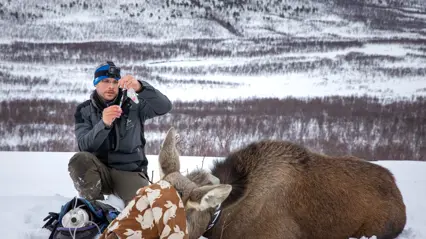
Our research ranges from basic biological questions to applied studies linked to forestry, fishing and hunting. Key themes in our research include biodiversity and the sustainable use of natural resources.
Our courses and programmes
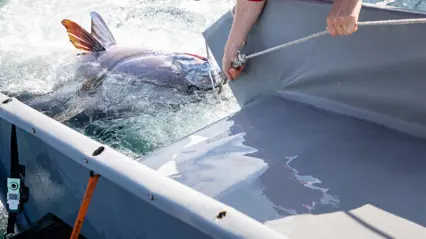
We offer a unique Master's programme in conservation and management of fish and wildlife. You can also take freestanding courses or do your Master's thesis with us.
Contact us
Do you have questions about our programmes and courses or our research? Here, you will find contact details for the people who have the answers.
Wireless Remote Animal Monitoring
SLU WRAM is a national knowledge centre and platform for animal data.
Contribute to a sustainable future for fish and wildlife
Our international Master's programme is unique, and lectures are given by world-leading researchers.
News & Events
News
-
Cocaine pollution alters salmon movement in the wild
Cocaine pollution alters the behaviour and movement patterns of juvenile Atlantic salmon in a large lake. Exposed fish swam up to 1.9 times further per week and travelled up to 12.3 kilometres further across the lake, according to a new study from the Swedish University of Agricultural Sciences. -
The Great Moose Migration: SLU research offers unique insight into the TV moose’s lives
How far do moose migrate? When are calves born, and what challenges do they face? For years, researchers have studied moose in Junsele, where the slow TV program The Great Moose Migration is filmed. Now, new and exciting facts about the “TV moose” will be presented. -
New film will raise awareness about beavers: “Our key nature conservationist”
Beavers can be a troublesome neighbour, but they play a vital role in nature. A film from SLU and the Swedish Forest Agency now offers us unique insights into the life of the beaver. The film presents a smorgasbord from the latest research to the role a royal hat played in the beavers' extinction. -
Migrating Junsele moose tracked with GPS – research project now reaching its end
For several years, researchers at the Swedish University of Agricultural Sciences (SLU) have been collecting data on moose movements in the Junsele area. The aim has been to understand how moose and their migration are affected by changes in the forest landscape. The project is now coming to an end. -
Northern Swedish rivers cause female bears to hesitate – but males swim across
The large rivers that flow through northern Sweden affect how brown bears move through the landscape. When bears reach the riverbank, males and females act differently. This is shown by a study conducted by researchers at the Swedish University of Agricultural Sciences (SLU).
Calendar
Research projects
-
PharmaBat
The project focuses on how pharmaceutical pollutions spread from aquatic environments and what effects they have on bats, their health and the role bats play in the spread of disease. -
Key Performance Indicators – Biodiversity in Production Forests
The project Key Performance Indicators (KPI) examines how biodiversity in production forests can be effectively measured, evaluated, and monitored through scientifically robust and cost-efficient indicators. -
Zambia Carnivore Programme
We study large carnivores in Zambia using genomic tools for science, education, and conservation. -
Recreating shallow lakebeds – a measure that promotes biodiversity in regulated lakes?
Hydropower is central to Sweden’s fossil-free energy supply but entails major ecological consequences. This project is developing innovative methods to restore shallow lakebeds and investigate whether this can enhance biodiversity and ecosystem function in regulated lakes. -
Continuous cover forestry and its effects on biodiversity and ecosystem services
In this project we investigate how continuous cover forestry methods influence biodiversity and ecosystem services in the short and medium term.