
Restoring aquatic ecosystems for the future
We contribute to restoration of aquatic ecosystems by focusing on the key processes that shape resilient, biodiverse ecosystems for the future. Developing and refining methods to quantify improvements of biodiversity, and ecosystem functions and services is a central part of our work.
Biodiversity in Europe is in serious decline. Habitat loss and degradation has been identified as a primary cause, especially in freshwater ecosystems. There is an urgent need to increase both our basic understanding of relationships between habitat diversity, habitat quality, and the biodiversity and activities of species. A range of mitigation measures can improve habitats and support biodiversity. But greater knowledge of their effectiveness is needed, as actions are often not monitored or evaluated.
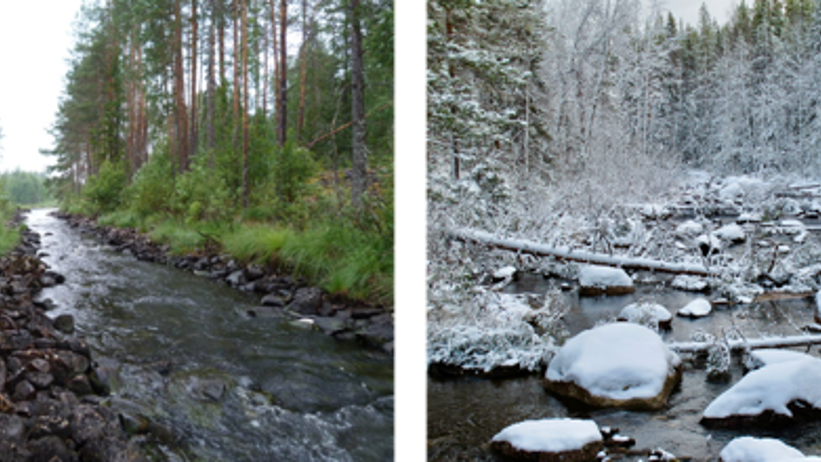
We support well thought-through restoration measures because biodiversity-rich landscapes increase resilience to climate change. Their greater functional diversity enables them to withstand, recover from, and adapt to climate-related disturbances such as floods, droughts, and storms. Diverse ecosystems act as natural buffers, maintaining essential services - such as water regulation, carbon storage, and nutrient cycling and consequently ensure the continued delivery of ecosystem services to society. Here, we use the term restoration in a broad sense, referring to efforts to improve or recover thriving, biodiverse and well-functioning habitats and ecosystems.
Restoring nature
Managing and recovering ecosystems can have different approaches, each with distinct goals, scales, and levels of intervention. The following concepts represent key approaches used to address environmental degradation and support ecosystem recovery.
- Mitigation reduces the negative impacts of environmental pressures without addressing their underlying causes. It does not restore ecosystems to their historical state but instead limits ongoing harm. Such measures often require continuous application to maintain their effect, for example liming in acidified waters.
- Rehabilitation aims to restore ecosystems to a self-sustaining state that closely resembles their original condition. As full restoration is rarely achievable, reaching a less disturbed historical state is generally considered sufficient. However, some stressors often persist, such as habitat fragmentation and reduced connectivity.
- Restoration aims to return ecosystems to their original condition, or as close to it as possible. It takes a landscape-scale perspective, ensuring that key hydrological and ecological connections are fully re-established and remain unconstrained.
- Remediation is an environmental management action that targets a specific problem by reversing environmental damage. It is typically implemented as a one-off intervention rather than a continuous process.
How the department contributes
Many experts at SLU work with nature restoration, below we will present examples of how we at the Department of Aquatic Sciences and Assessment contributes.
Contact
-
PersonBrendan Mckie, professorDivision of Ecology and Biodiversity