This is where it happens
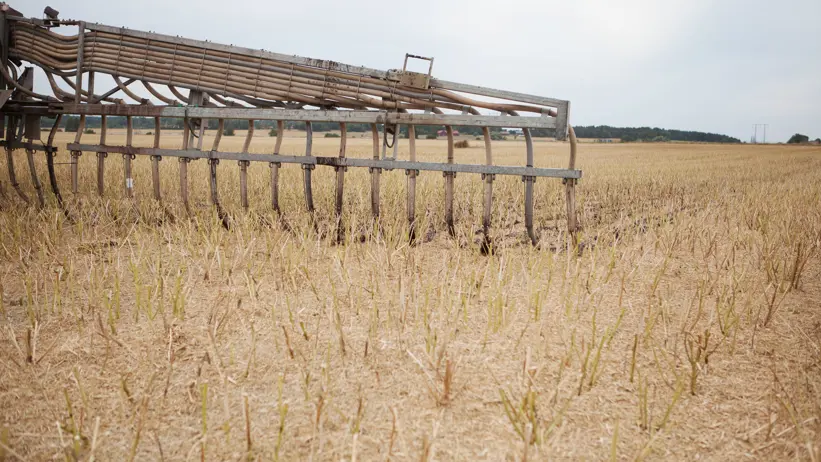
The vast majority of SLU’s long-term agricultural experiments are managed by four field research stations: Lanna, Lönnstorp, Lövsta, and Röbäcksdalen.
These stations also conduct shorter-term trials on behalf of researchers from SLU and other institutions. Additionally, they can assist companies in evaluating new crops and farming methods.
Although the field research stations are responsible for the experiments, the trials themselves may sometimes be located elsewhere —for instance, on the land of individual farmers.
Technicians, researchers, and administrative staff work on these long-term experiments year-round. During the intensive sowing and harvest periods, additional staff are sometimes brought in.
Further reading: Agricultural Field Research
Lanna
The oldest of SLU’s long-term field experiments are located at Lanna in Västergötland. Since the 1930s, research has been conducted on how various methods of enriching the soil, such as applying lime or phosphorus, affect the land and the crops.
also a focus on how different cultivation practices influence the transportation of nitrogen and phosphorus from agricultural land into watercourses, seas, and lakes.
If concentrations in the water become too high, it leads to eutrophication, which can result in issues such as algal blooms, lakes becoming overgrown with vegetation, and a loss of biodiversity.

Lönnstorp
1960s. Among other things, researchers investigate how the sequence in which crops are grown affects the soil and the plants. Trials involving the testing of new cultivation materials developed by SLU are also common.
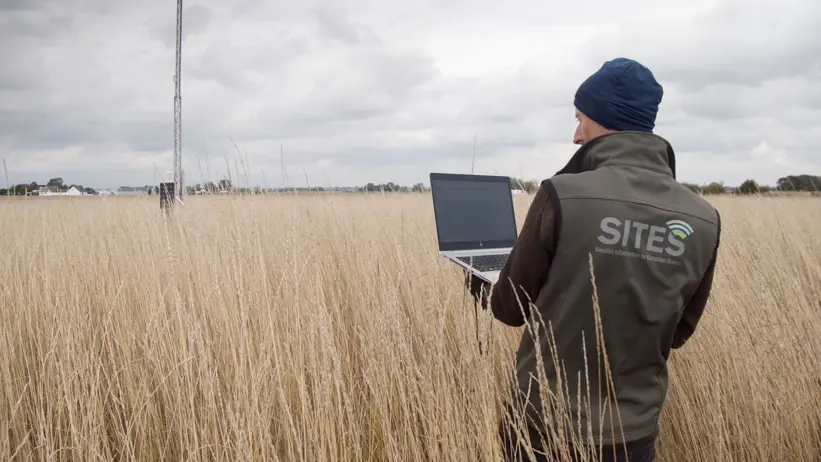
Like Röbäcksdalen, Lönnstorp is part of SITES. SITES is funded by the Swedish Research Council in collaboration with SLU and three other organizations. Its purpose is to collect research data and make it freely available to all researchers. Five of SITES’s nine research stations belong to SLU.
SITES Lönnstorp Research Station

Lövsta
Agricultural experiments were being conducted as early as the mid-18th century at today’s Lövsta. SLU took over the farm in 1970, and the research station is now responsible for around a hundred experiments in the Uppsala area, approximately ten of which are long-term trials.
One of the most frequently used experiments is RAM-56, dating back to 1956. The experiment consists of sixty plots that have been fertilized and enriched with various combinations of nitrogen and organic matter, such as straw. Researchers regularly examine how different soil amendments affect the land and the crops over time.
SLU Lövsta Field Research Station

Röbäcksdalen
Röbäcksdalen is located just outside Umeå. The research conduchted there include studies of crops such as leys and potatoes, which thrive in northern Sweden. The long-term exeperiments investigate, among other things, how fertilization and soil tillage affect the soil and the crops.
Röbäcksdalen is also responsible for long-term experiments in Ås, Offer, and Öjebyn. By conducting the same experiment at multiple locations, it is possible to compare the results across different environments.
SLU Röbäcksdalen Field Research Station
Experiments all across the land
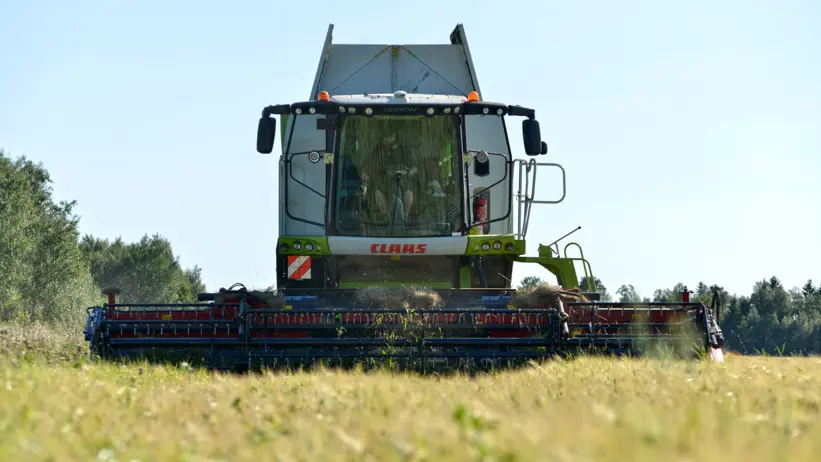
Sweden has a diverse land and climate. What can be cultivated in the south cannot always be grown in the north, and vice versa. Diseases and pests that cause problems in one part of the country may not exist at all in another. Therefore, research stations are needed in various locations across Sweden.
In addition to the four field research stations for agriculture, SLU also has research stations and research parks for the study of fish, forests, and wildlife.
Experimental forests and stations
Soil sampler
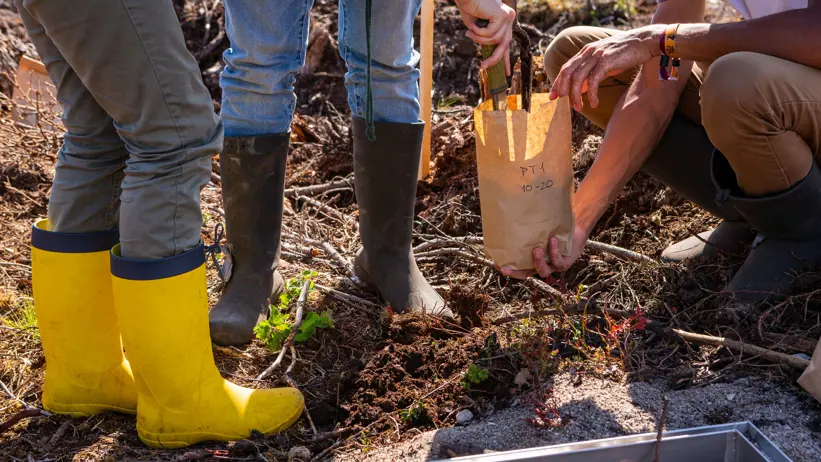
Many of the tools used long-term field experiments are now digital, though not all of them. One analog tool that has been in use for a long time is the soil sampler, which is still utilized to collect samples from near the soil surface.
The sampler is pushed, driven, or screwed into the ground and then pulled back out. The soil that has become trapped inside the hollow tip of the sampler comes up with it and can then be examined. For instance, one might measure the concentrations of various substances in the soil.
The ways of soil
By using a glass tube to take undisturbed soil samples, the structure of the soil is preserved. Researchers can then measure how water flows through the soil,how oxygen spreads in it, or how easily roots can grow.
Today, farmers often use large agricultural machinery, to make sowing and harvesting more efficient. However, when these machines become very heavy, they can compact the soil, making it difficult for water to flow and hard for plants to grow.