
Meet SLU’s new Professor of One Health
Ingrid Ljungvall is SLU’s new Professor of One Health with a focus on Comparative Medicine. In this interview, she talks about her new role and how comparative medicine can strengthen One Health research at SLU.

Under the same roof: what can our pets tell us about the environment we share?
Humans and companion animals often share the same environment – but do we also share the same exposure to chemicals? In this interview, Ida Hallberg explains how studying our pets may help us better understand environmental health risks affecting both animals and people.

Restoring landscapes for healthier people, animals and ecosystems
Can restoring forests and grasslands benefit people, livestock and nature? In this interview, Harry Fischer shares insights from a project in India exploring how ecosystem restoration may support biodiversity, food security, livestock health and human well-being.

What can bats tell us about pollution, ecosystems and health?
How do pharmaceutical pollutants move between ecosystems, wildlife and people? In this interview, Natalia Sandoval Herrera shares insights from a project exploring how bats can help us understand how contaminants move through food webs – and what this may mean for environmental, animal and human health.

From health psychology to One Health – meet Nina Lind Ranneberg
Nina Lind Ranneberg has taken on the role of Programme Director for SLU Future One Health. With a background in health psychology and interdisciplinary research, she is keen to further strengthen collaboration across disciplines and highlight the breadth of One Health research at SLU.

Understanding mosquito behaviour to reduce disease transmission
Due to climate change and human activity, disease transmission and the spread of invasive mosquito species across Europe pose a significant health risk to both people and animals.

Reconnecting children with nature – a One Health perspective
Nature-rich environments play a key role in children’s health, development and social interaction. In this interview, Fredrika Mårtensson shares how access to biodiverse outdoor environments supports well-being – and why this matters from a One Health perspective.

When farmer well-being meets animal welfare
Improving calf welfare is not only about management and housing practices (e.g. feeding) – it is also about the people behind them. This interdisciplinary project explores how technology, working conditions and social sustainability are interconnected within a One Health perspective.
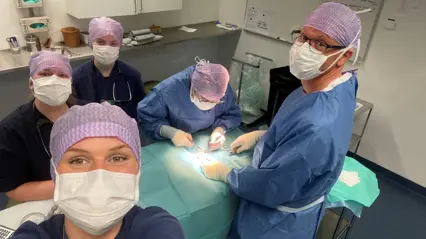
New surgical methods of benefit to both humans and animals
The materials mean that we don't have to harvest donor tissue (in humans, bone tissue is usually taken from the hip bone; in dogs, we usually harvest it from the "upper arm bone" humerus). Instead, those synthetic ceramic materials can be used, man-made bone graft material."
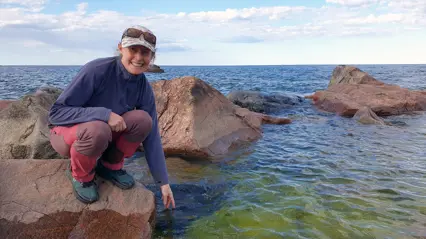
How to sustain healthy marine ecosystems and food webs
Ecosystem-based management acknowledges the complexity of the system and employs measures to ensure that biodiversity is maintained, all resources are used sustainably, and ecosystem services are available to humans across society."

Making valuable products from cassava residues
”By integrating food safety, environmental protection, and human well-being, my work reflects the core principles of the One Health approach”, says Andreia Massamby, new PhD at the Department of Molecular Sciences.

Safe food and healthy people – how One Health research makes a difference
In many low- and middle-income countries (LMIC), livestock are vital sources of food, income and nutrition. However, when animals are kept close to people, and when animals and foods are sold at traditional markets with inadequate hygiene and biosecurity, the risk of spreading bacteria that cause disease or antimicrobial resistance (AMR) increases."

How natural enemies can reduce pests
“My work connects plant health with overall ecosystem health because when natural enemies, like insects, control pests, crops grow better and require fewer chemicals, which is healthier for the environment”, says new PhD Grace Mercy Amboka, Department of Ecology.

How breakdown products from antibiotics and antivirals impact rivers and lakes
Our results show that some antibiotic transformation products might retain antibacterial activity , which could be of interest to other sectors within One Health, especially considering the issue of antimicrobial resistance

Heat-stressed dairy cows – A One Health challenge in a changing climate
Tackling heat stress in dairy cows is not only about keeping animals cool, but about protecting food security and building resilience in the transition towards a more sustainable dairy production in a warming world."

Rooted in plant science – sparking collaboration across disciplines
“The growing interest in nature-based solutions and sustainable agriculture opens space for plant science to take a stronger role within One Health”, says Anna Manourova, coordinator for the plant science network PlantLink.
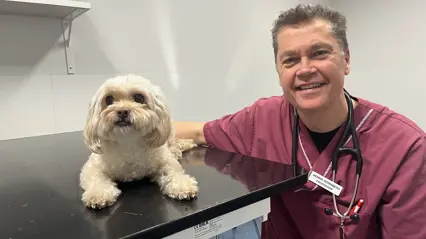
Win-win for both animal and human patients
Early clinical results are highly encouraging: several dogs have shown measurable tumor regression with minimal to no side effects. This is particularly promising, as there are currently no licensed veterinary treatments specifically for these cancer types, despite their poor prognosis and significant impact on canine welfare."
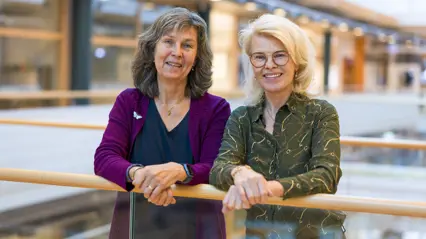
Unlocking precision diagnostics and targeted therapies for osteoarthritis
Our translational research has identified novel OA specific biomarkers that are conserved across species, including humans. We have developed diagnostic assays to analytically validate and quantify these biomarkers in body fluids from both horses and humans.
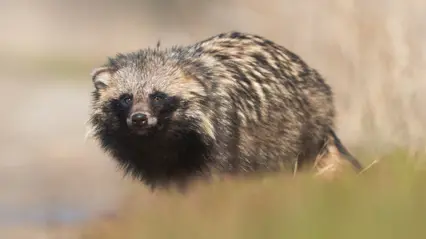
Succesfully managing the raccoon dog to reduce risks to biodiversity and health
“Invasive alien species are generally bad for biodiversity. They occupy areas and either outcompete or kill native species. Invasive alien animals may spread diseases to native species."

Sectors must work together to combat antibiotic resistance
Antibiotic resistance is a true One Health issue because bacteria are rarely limited to one animal species or location. This means that resistance that develops in livestock can spread to humans ‒ for example, through direct contact, the environment, or animal-source foods."
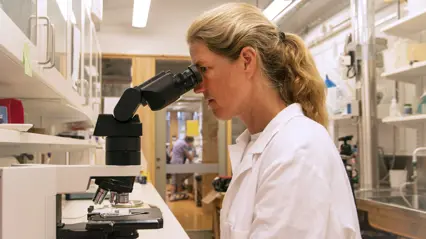
“Mini-guts” show how parasites infect and how probiotics can help fight them
We’re building “mini-guts” in the lab from horse and dog cells to study how parasites infect and how probiotics can help fight them. The aim is to find sustainable alternatives to drugs, which parasites are rapidly becoming resistant to."