
Bridging the research–impact gap: AgriFoSe2030 uses Theory of Change to turn science into policy and practice
While this principle is widely accepted in academia, the methods of translating research outputs for everyday societal use is unclear and lacks well-established systematic processes, leading to enduring research to policy and practice gaps.
“No research without action, no action without research” - Kurt Lewin, 1946.
Since 2020, AgriFoSe2030 has systematically applied Theory of Change (ToC) as a core methodology to strengthen science translation in agricultural research targeting smallholder production systems. What began as a structured planning and learning tool at project level has gradually evolved into a capacity-building approach with enduring institutional impact, contributing to more effective translation of research into policy, practice, and societal change.
This progress has been made possible through the dedicated work of Dr. Isabel Vogel who implemented ToC within the AgriFoSe2030 programme and continuously refine and adapt the methodology to fit the programme’s evolving needs and contexts.
Strengthening science translation through structured co-creation
By embedding ToC across all AgriFoSe2030 projects, research teams were supported to move beyond the commonly used linear, output-oriented research models and instead engage in explicit, participatory, and context-sensitive pathways of change. ToC workshops enabled researchers to work jointly with farmers, extension agents, policymakers, and private-sector actors to surface assumptions, identify leverage points, co-create causal pathways and align research outputs with real-world decision-making processes.
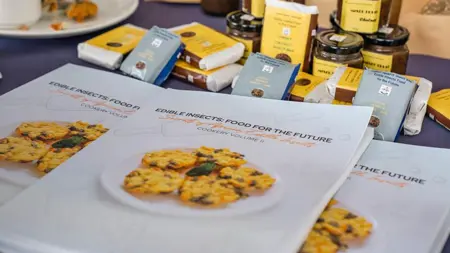
Evidence from 17 projects implemented during AgriFoSe2030 phase 1 and 2 (2018–2024) to showcase the uptake of scientific evidence in policy and practice demonstrates that this approach strengthened the relevance and usability of scientific knowledge. Smallholder farmers improved productivity in coffee-banana and sorghum-cowpea intercropping systems in Uganda and South Africa; food safety, and market engagement was improved in milk and edible insects value chains in Uganda and Zimbabwe; women and youth gained greater agency and access to income-generating opportunities through improved goat health in Laos and e-commerce opportunities in Vietnam; and extension services enhanced their capacity to deliver participatory, gender-sensitive and digital support in Tanzania, Philippines, Cambodia and Vietnam. Several projects also informed standards and sub-national policies such as edible insects standards in Zimbabwe, camel health and food system governance strategies in Samburu and Kisumu counties, Kenya. Additionally, innovation platforms and networks established through ToC-informed processes have continued to function beyond individual project lifespans providing relevant scientific evidence to policymakers and practitioners—an indication of established structural foundations for science translation contribution to longer-term systems change.
Scaling capacity through education and networks
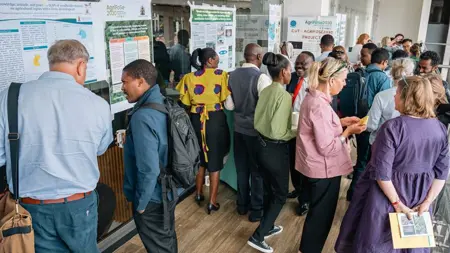
A significant and partly unintended impact of AgriFoSe2030’s ToC methodology has been its diffusion through academic and research networks. Building on programme experience, a dedicated digital ToC course was developed and integrated into another global capacity building network, Global Challenges University Alliance (GCUA 2030), enabling doctoral students and early-career researchers from more than 20 universities worldwide to build competence in science translation.
The transformative potential of this capacity development is illustrated by a doctoral student at the Autonomous University of Queretaro, Mexico, who, after participating in a GCUA 2030 course where ToC was a central component, initiated a ToC-based sustainability course for professors at her home university. This example demonstrates how ToC has enabled early-career researchers to act as institutional agents of change, transferring science translation practices into new academic and educational contexts.
Building resilience during crisis
When the COVID-19 pandemic disrupted international collaboration at the onset of AgriFoSe2030 phase 2, the online ToC course, developed in collaboration with the GCUA 2030 network, was rapidly adapted to support AgriFoSe2030 project teams in co-creating their ToCs virtually, allowing projects to proceed with minimal delay despite severe global restrictions.
At programme level, this investment generated additional value beyond immediate crisis management. By sharing the course content with other initiatives, AgriFoSe2030 strengthened cross-programme learning and collaboration, demonstrating how jointly developed resources can enhance resilience and coherence across initiatives. The experience highlighted the value of ToC not only as a planning and outcome focused tool, but also as a shared capacity-building asset that supports continuity, common understanding, and adaptive capacity in times of crisis.
Institutionalization and long-term impact
One of the most significant and enduring impacts of AgriFoSe2030’s ToC approach is its institutional anchoring. Through its integration into GCUA 2030, coordinated by SLU, the ToC course has been institutionalized at SLU and is now offered as a standing doctoral course within the university’s regular course portfolio. This marks a transition from project-based training to long-term institutional capacity building, ensuring that science translation becomes a core competence for future generations of researchers in Sweden. Potential exists for the course to be scaled-up and broadly offered though Sweden’s network of doctoral and staff capacity building courses such as the National doctoral courses and teaching and learning in higher education courses.
Since 2025, ToC has also been applied within AgriFoSe2030’s regional university hubs in Africa. This comprises building a network of universities in Kenya, Uganda and Zimbabwe through which capacity building and science translation knowledge is shared and disseminated beyond the hubs. Hub-level ToCs have enabled partner universities to articulate shared visions for institutionalizing capacity building for science translation locally, strengthening collaboration across institutions and supporting south–south learning on how research can more effectively inform policy and practice.
Relevance beyond programme geographies
While AgriFoSe2030’s impacts have primarily been realized in sub-Saharan Africa and South and Southeast Asia, the experiences from the programme point to a broader relevance of ToC–based science translation. Recent global shocks, including pandemics, climate extremes, and geopolitical disruptions, have underscored that food system vulnerabilities are not confined to low- and middle-income countries. Strengthening the capacity of researchers, institutions, and policymakers to translate knowledge into coordinated action is increasingly critical also in European and other high-income contexts. The ToC science-translation methodology is applicable to multiple themes beyond sustainable agriculture and food security as its core value lies in managing complexity and integrating a systematic, co-creative process for attaining change.
The AgriFoSe2030 experience demonstrates that ToC can function as a boundary-spanning methodology, supporting dialogue across disciplines, sectors, and governance levels, and enabling adaptive responses under uncertainty. As such, the approach offers a transferable foundation for building more resilient, inclusive, and crisis-responsive food systems across diverse contexts.
A foundation for future systems change and bridging the research–impact gap
Taken together, AgriFoSe2030’s work with ToC illustrates how a structured yet flexible methodology can evolve from a project tool into a movement for institutional learning and systems change. By embedding ToC in research projects, education, university networks, and organizational structures, the programme has strengthened the ability of researchers and institutions to understand not only what works, but why, where, and under what conditions, and how this knowledge can be translated into meaningful impact. This provides a robust foundation for future engagement, within existing partnerships and beyond, for advancing science translation as a cornerstone of sustainable and resilient food systems.
This change story is written by Elisabeth Rajala, Sofia Boqvist, Selorm Kugbega and Ivar Virgin.
Contact
-
Elisabeth Rajala, Associate professor
Programme Director
Department of Biomedical Sciences and Veterinary Public Health, SLU
Telephone: +46 18-67 20 36
E-mail: Elisabeth.Rajala@slu.se -
Selorm Kugbega, Dr.
MEL and Communications
SEI, Stockholm Environment Institue
Phone: +46 (0)73- 27 04 306
E-mail: selorm.kugbega@sei.org