Calls for funding
Open calls for funding and seed money from the Future Platforms.
The mission of the Future Platforms
The Future Platforms integrate different scientific fields and their activities are characterized by an interdisciplinary and multidisciplinary approach, which is carried out across all faculties and in collaboration with relevant social actors. Complex scientific questions can therefore be tackled in a multifaceted way.
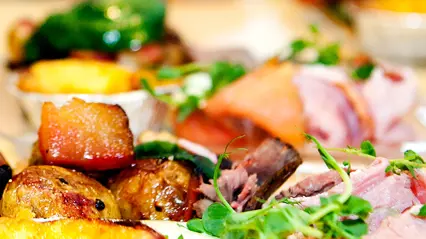
SLU Future Food
Stimulates and develops cross-disciplinary research and collaboration for economically, ecologically and socially sustainable food systems.

SLU Future One Health
Our starting point is the One Health perspective, the interaction between animal, human and ecosystem health.
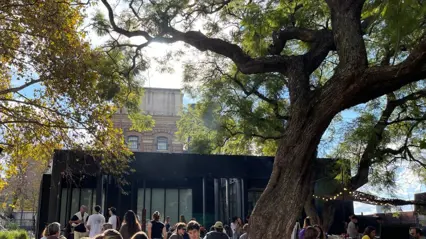
SLU Urban Futures
We live in an increasingly urbanised world. How do we create ecologically, economically and socially sustainable urban landscapes?

SLU Future Forests
The role of forests for sustainable development, a biobased economy, climate adaptation and ecosystem services.
Interdisciplinarity at SLU
One of the most important goals for the Future Platforms is to develop interdisciplinary working methods at SLU by initiating and enabling collaboration across scientific disciplinary boundaries.
News from the Future Platforms
-
Gene editing in plant breeding – a precision tool for better potatoes
CRISPR/Cas9 is the most widely used gene-editing tool and enables highly precise modifications of DNA. In plant breeding, it is used to improve important traits such as disease resistance, drought tolerance, and nutritional value. Researcher Matías González works with new genomic techniques. -
Circle of life - all together through the silent pandemic
An era comes to an end as more bacteria develop resistance to antibiotics and the certainty that we can cure diseases slowly fades. The “silent pandemic” is sweeping the globe, and the solution now depends on us rethinking our approach together—for the sake of people, animals, and nature as one. -
How does the war in Ukraine affect global food security?
The war in Ukraine is having an extreme impact on the people of the country. In addition to the enormous suffering and the great need for humanitarian aid, the war has other consequences. One of them is the negative impact on the global food supply. -
A cause of persistent taste loss after Covid-19 has been discovered
Some people have experienced a loss of taste long after a COVID-19 infection has subsided. Researchers from SLU, Uppsala University and the University of Colorado have shown that this may be due to a disruption in taste cells that would otherwise give rise to experiences of sweet, bitter or umami. -
How cities can become more sustainable – research summarized in ten lessons
A new international study has reviewed two decades of urban experiments and summarized ten lessons that can help cities become more sustainable. Kes McCormick from SLU is one of the researchers behind the work.