A Non-Toxic Environment programme

The programme for environmental monitoring and assessment A Non-Toxic Environment at SLU provides decision support and expertise in the work towards a non-toxic environment in Sweden. The data from our monitoring programmes contribute to the overall picture of the environmental status regarding hazardous substances.  We also assess the risks with hazardous substances and their effects, and support the work with Sweden's international commitments on environmental pollutants.

Person outdoors in a park setting.

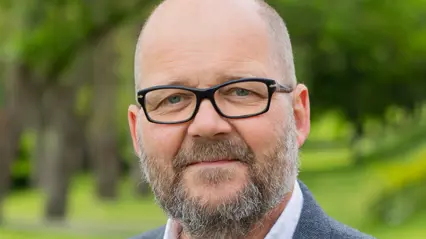
Gunnar Carlsson, coordinator for the Non-Toxic Environment programme

+46 18 671145, +46 704032926, gunnar.carlsson@slu.se. Researcher at the Department of Animal Biosciences (HBIO), Pharmacology, Toxicology and Parasitology, SLU.
Person outdoors in a green environment.

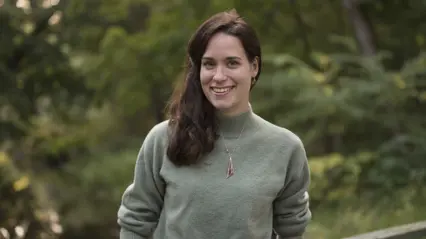
Alina Koch, assisting coordinator for the Non-Toxic Environment programme

+46 18 673064, +46 720082370, alina.koch@slu.se. Researcher at the Department of Aquatic Sciences and Assessment, Division of Environmental Organic Chemistry and Ecotoxicology, SLU.
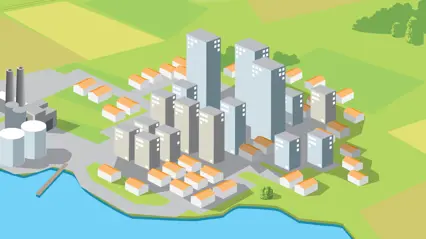
Selection of environmental analysis data for the environmental objective A Non-Toxic Environment

In SLU's environmental data catalogue, you can search and browse open data from our environmental monitoring and assessment.

Resources within A Non-Toxic Environment

  • SLU Centre for Pesticides in the Environment

    CKB is a partnership forum within the area of chemical pesticides for researchers at SLU and interested parties outside the university. The Centre focuses mainly on fate and effects in the environment of pesticides used within agriculture.
  • MACRO models

    We are developing pesticide decision-support and risk assessment tools for various end-users (e.g. public authorities, consultants, industry and research) at field, farm, catchment and national scales.
  • Organic environmental chemistry (OMK) laboratory

    Organic environmental chemistry (OMK) laboratory develops methods and performs analyses of mainly pesticides (plant protection products, both currently used and banned) in different matrices such as water, sediment, soil, air and bees.