Our mission
Here at the department, our mission is to advance the understanding of forest ecosystem processes and to progress the principles of forest ecosystem management.
Laboratory Facilities
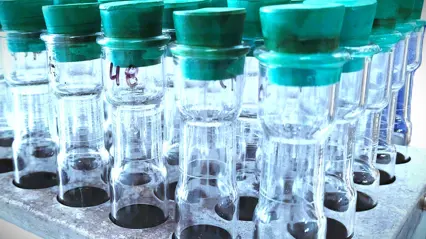
Our state-of-the-art labs offer analysis on soils, plants, gases, and water components in SSIL, BAL and research lab facilities
Research Infrastructures
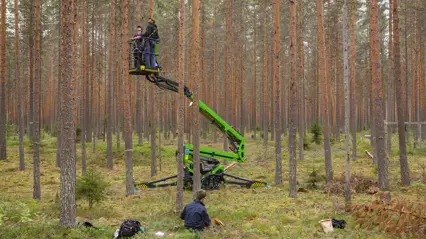
The unit for field-based forest research was established in 2004 and is part of the Faculty of Forest Sciences.
BIOGEOMON 2026
SLU host the BIOGEOMON conference on June 8-11, 2026 at the Umea Campus
WIFORCE
Wallenberg Initiatives in Forest Research explore how climate, environment, and genetics affect forest growth and health
News & Events
News
-
Gene editing in plant breeding – a precision tool for better potatoes
CRISPR/Cas9 is the most widely used gene-editing tool and enables highly precise modifications of DNA. In plant breeding, it is used to improve important traits such as disease resistance, drought tolerance, and nutritional value. Researcher Matías González works with new genomic techniques. -
SLU and WWF launch new collaboration to inspire the next generation of forest professionals
A forestry education doesn’t just lead to work in the forest – it opens doors to careers in climate, business, biodiversity, research and innovation. Now, SLU and WWF are launching a collaboration to highlight opportunities within forestry and sustainable development. -
Circle of life - all together through the silent pandemic
An era comes to an end as more bacteria develop resistance to antibiotics and the certainty that we can cure diseases slowly fades. The “silent pandemic” is sweeping the globe, and the solution now depends on us rethinking our approach together—for the sake of people, animals, and nature as one. -
New doctoral thesis about methane from dairy cows
On February 6, Melania Angellotti successfully defended her doctoral thesis, “Inclusion of Asparagopsis spp. in Dairy Cow Diets to Mitigate Enteric Methane Emissions – Animal and Microbial Responses” . -
The chocolate economies
Half of the worlds cocoa stems from West Africa, making the cocoa bean the foundation for one of the most important agroforestry-based economies. What happens to everyone working with cocoa when a harvest is affected by drought?