Our mission
Here at the department, our mission is to advance the understanding of forest ecosystem processes and to progress the principles of forest ecosystem management.
Laboratory Facilities
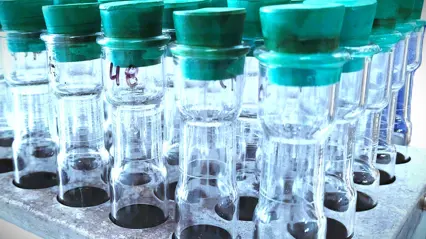
Our state-of-the-art labs offer analysis on soils, plants, gases, and water components in SSIL, BAL and research lab facilities
Research Infrastructures
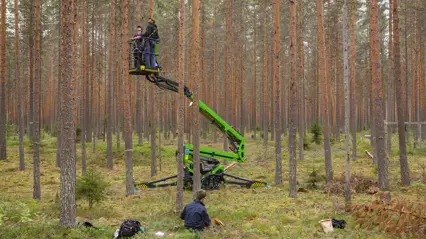
The unit for field-based forest research was established in 2004 and is part of the Faculty of Forest Sciences.

BIOGEOMON 2026
SLU host the BIOGEOMON conference on June 8-11, 2026 at the Umea Campus
WIFORCE
Wallenberg Initiatives in Forest Research explore how climate, environment, and genetics affect forest growth and health
News & Events
News
-
Circle of life - all together through the silent pandemic
An era comes to an end as more bacteria develop resistance to antibiotics and the certainty that we can cure diseases slowly fades. The “silent pandemic” is sweeping the globe, and the solution now depends on us rethinking our approach together—for the sake of people, animals, and nature as one. -
New doctoral thesis about methane from dairy cows
On February 6, Melania Angellotti successfully defended her doctoral thesis, “Inclusion of Asparagopsis spp. in Dairy Cow Diets to Mitigate Enteric Methane Emissions – Animal and Microbial Responses” . -
The chocolate economies
Half of the worlds cocoa stems from West Africa, making the cocoa bean the foundation for one of the most important agroforestry-based economies. What happens to everyone working with cocoa when a harvest is affected by drought? -
Rare boreal deadwood fungi do not recover in clear-cut forests
Managed boreal forests support far less diverse fungal communities compared to successional forests sprung from forest fires. A new study from the Swedish University of Agricultural Sciences shows stark differences in the abundance of rare species between environments of different forest regimes. -
Still huge errors in remote sensing assessments of global forests
Methods for assessing forest biomass using spaceborne data are improving, but they are still far from truly reliable. That is the conclusion of a new study from the Swedish University of Agricultural Sciences (SLU).