
The Environmental Organic Chemistry Group
Group members
Related research projects
- Sorb & Destruct – developing next-generation nanomaterials for PFAS treatment
- Stopping spreads of antibiotic resistance genes and antibiotics from on-site sewage facilities to the groundwater
- Predicting organic micropollutants in aquatic environments: a machine learning approach (MLPOMA)
- Bioremediation of DDT-contaminated soil
- New practice for assessment and management of risks associated with unwanted chemical substances in water
- Are today’s stormwater systems safe chemical filters for toxic micropollutants?
- Understanding Pesticide-Pollinator Interactions to Support EU Environmental Risk Assessment and Policy (PollinERA)
- TRACED: New methods to trace hazardous substances in our waters
- Blackwater treatment and fate of pharmaceuticals and antibiotic resistance genes
- Mälaren in focus
- REASSURE: is purified wastewater a non-toxic and sustainable resource in the future?
- Impact of winter heat waves on the mining-affected environment
- PFAS - research overview
- PFAS treatment methods
- SIDWater - Sustainable innovative drinking water treatment solutions
- PARC - Partnership for the Assessment of Risks from Chemicals
- Impact of antimicrobial chemicals on the emergence of antimicrobial resistance in aquatic environments
- On-farm biochar filters for removal of organic micropollutants from reclaimed water for agricultural irrigation (Biokolfilter)
- MECROPLAN: Mapping of contaminants of emerging concern (CECs) in landfill leachate
Related research topics
The Environmental Organic Chemistry Group aims to increase the knowledge about organic micropollutants in aquatic and terrestrial environments, their impacts, and solutions for a non-toxic and sustainable future.
Our research
Our research is conducted at the Department of Aquatic Sciences and Assessment and focuses on improving water quality and promoting the sustainable use of water resources. The work is carried out within our research group, the POP’s Lab, and within the SLU Center for Chemical Pesticides in the Environment (CKB), fostering interdisciplinary expertise in environmental organic chemistry and sustainable water management. Learn more about CKB’s research here and the POP’s Lab below.
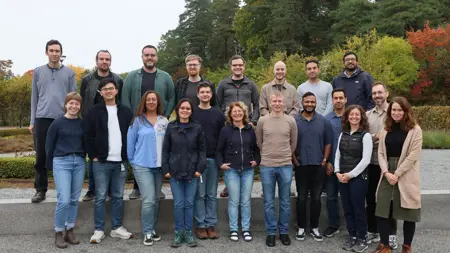
The POP's lab
The POP’s Lab is dedicated to the trace analysis of organic micropollutants in the environment. Our research focuses on highly fluorinated substances (PFAS), pharmaceuticals, antimicrobial resistance, industrial chemicals, and other emerging pollutants that pose a potential risk to ecosystems and human health.
Using advanced target and non-target high-resolution mass spectrometry (LC/GC-MS/MS and LC-HRMS), we develop innovative analytical methods to detect contaminants at ultra-trace levels. A key objective of our work is to establish early warning methodologies and new strategies for identifying previously unknown chemical risks, with a particular emphasis on water environments.
Through prioritization and risk assessment strategies, cutting-edge analytical tools, and the development of innovative treatment methods, we aim to improve environmental monitoring, strengthen risk assessment frameworks, and advance practical solutions for mitigating current and emerging contaminants in the environment.
The POP's lab
Seniors
- Professor Lutz Ahrens, Research Group Leader
- Assistant Professor Nikiforos Alygizakis
- Assoc. Prof. Foon Yin Lai, senior lecturer
- Professor Karin Wiberg, Professor Emerita, currently working 20% at SLU
- Dr. Georgios Niarchos, researcher
- Dr. Javad Mottaghipisheh, researcher
- Dr. Uzair Akbar Khan
- Dr. Alina Koch
Postdocs
PhD students
Guest PhD students
Technical personnel
- Mia Lukaric, Laboratory Manager
Guest researcher/post-docs
- Dr. Pablo Gago Ferrero, August T Larsson Guest Researcher, IDAEA-CSIC, Spain
- Dr. Aleksandra Skrobonja, University of Belgrade, Serbia
Related links
- Institutionen för vatten och miljö (Department of Aquatic Sciences and Assessment)
- Avdelningen för ekologi och biodiversitet (Division for Ecology and Biodiversity)
- Avdelningen för geokemi och hydrologi (Division of Geochemistry and Hydrology)
- Avdelningen för mikrobiell ekologi (Division of Microbial Ecology)