Research for the forests of the future
About WIFORCE
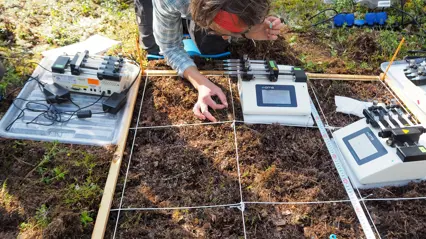
WIFORCE is a research programme exploring what influences forest growth, resilience and biodiversity, to enable sustainable use and conservation in a changing climate.

WIFORCE Arenas
Shared research environments where researchers and societal stakeholders explore the role of forests in a changing climate and society.
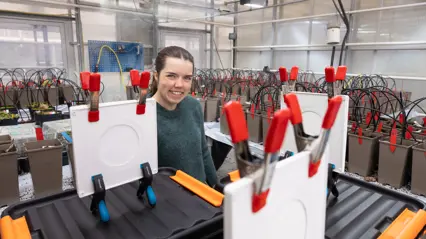
WIFORCE Research School
PhD training bringing together around 50 doctoral students, including industrial and collaborative PhD students.
News
-
Understanding carbon storage in forests means looking at the whole ecosystem
Boreal forests store about one third of the world's forest carbon. But how they should be managed to store more carbon and help mitigate climate change is debated. In his PhD thesis, Marcus Larsson shows that focusing only on trees is not enough, carbon in the soil should also be taken into account. -
WIFORCE takes the next step towards field-based research arenas
How can shared, long-term research environments contribute to the future of sustainable forestry? This question was at the centre when around 60 researchers and stakeholders met to take the next step in developing WIFORCE Arenas.
Upcoming events
Join us
Several PhD and postdoctoral positions linked to WIFORCE are currently open for application.
Most recently published projects
-
Microclimate buffering and species responses to clearcut and non-clearcut forestry
How do changes in microclimate affect forest biodiversity? This project investigates how different forest management practices, such as clear-cutting and continuous-cover forestry, influence microclimate and, in turn, the survival and vitality of different species. -
The function of tree retention for biodiversity
How do trees retained after harvesting affect biodiversity over time? This project investigates how retention trees contribute to preserving species in managed forests, with a focus on lichens growing on aspen. -
The role of large mammalian herbivores for regeneration and diversity over time in boreal forest landscapes
Large herbivores such as moose and reindeer influence forest biodiversity, but their interaction with forestry and other disturbances is not fully understood. This project investigates how browsing, forestry and fire affect plant, lichen and soil communities over time in boreal forests. -
Efficient use of bioash in forestry
Can wood ash be used more efficiently in forestry? This project explores new application methods to turn wood ash into a resource rather than a waste product – while supporting nutrient balance and resource efficiency in forest ecosystems.

For WIFORCE researchers
Find support, information and tools for your work within WIFORCE.