Department of Forest Ecology and Management

Our mission is to advance scientific understanding of forest ecosystems and the underlying ecological processes, while refining evidence-based principles for their sustainable and effective management.

  • Climate Change
  • Carbon and Nitrogen cycling
  • Forest vegetation and sustainable digital planning tools

Our mission

Here at the department, our mission is to advance the understanding of forest ecosystem processes and to progress the principles of forest ecosystem management.

Want to know more about us?

Field research svartberget

Research

We conduct interdisciplinary research across the entire forest landscape. More information on themes, disciplines and research catalogue

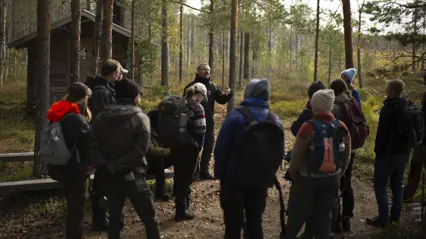
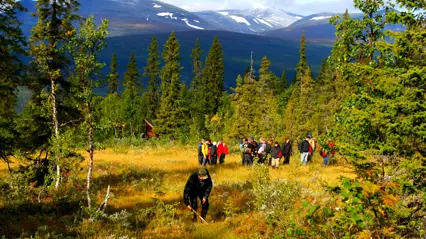
Scene from Krycklan course 2026 foto: Duncan Philpot

Education

Our world-class forestry education includes a three-year Forest Science program, master's level courses, and Postgraduate education.

Contact

Laboratory Facilities

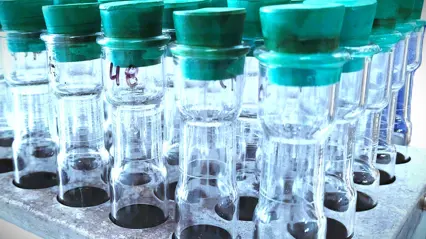
Our state-of-the-art labs offer analysis on soils, plants, gases, and water components in SSIL, BAL and research lab facilities
Research Infrastructures

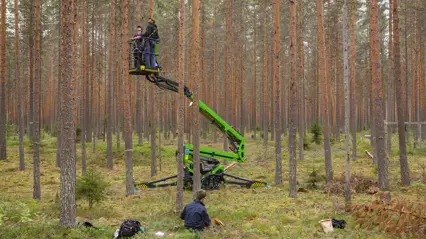
The unit for field-based forest research was established in 2004 and is part of the Faculty of Forest Sciences.

Find us

BIOGEOMON 2026

SLU host the BIOGEOMON conference on June 8-11, 2026 at the Umea Campus
WIFORCE

Wallenberg Initiatives in Forest Research explore how climate, environment, and genetics affect forest growth and health

News & Events

News

  • 11 new professors inaugurated at SLU Ultuna

    On Friday, 24 April, 11 professors from Alnarp and Uppsala were inaugurated at SLU Ultuna. The ceremony took place in the auditorium of Undervisningshuset and was followed by a formal dinner with entertainment.
  • Understanding carbon storage in forests means looking at the whole ecosystem

    Boreal forests store about one third of the world's forest carbon. But how they should be managed to store more carbon and help mitigate climate change is debated. In his PhD thesis, Marcus Larsson shows that focusing only on trees is not enough, carbon in the soil should also be taken into account.
  • New findings on DDT remediation in soil

    DDT remains in Swedish soils – and is difficult to remove. A new thesis from the Swedish University of Agricultural Sciences shows that several innovative remediation methods yield limited results. At the same time, the thesis highlights techniques that could work significantly better.
  • Urban forests are becoming increasingly important for climate adaptation in cities

    How should Europe’s cities plan and manage their forests in a time of climate change and growing demands for resilient urban environments? This question is at the center as SLU researcher Thomas Randrup speaks at a European conference in Antalya.
  • Hazelnuts are imported despite growing in the wild – now SLU is researching Swedish production

    It is nutritious, reliable for food preparedness, and sought after by chefs at luxury restaurants. The hazelnut has many advantages, but is barely cultivated commercially in Sweden. Now researchers at SLU are investigating how production of the nut can become economically viable.

Calendar